EU’s Controversial Invitation to Taliban Officials Raises Human Rights Alarms
The European Commission’s decision to invite Taliban officials to Brussels for discussions on migrant deportations has ignited a fierce backlash from human rights organizations. Over 80 advocacy groups are urging EU leaders to reconsider this diplomatic engagement, warning that it risks legitimizing a regime notorious for its oppressive policies against women and girls.
Human Rights Groups Respond to EU’s Diplomatic Approach
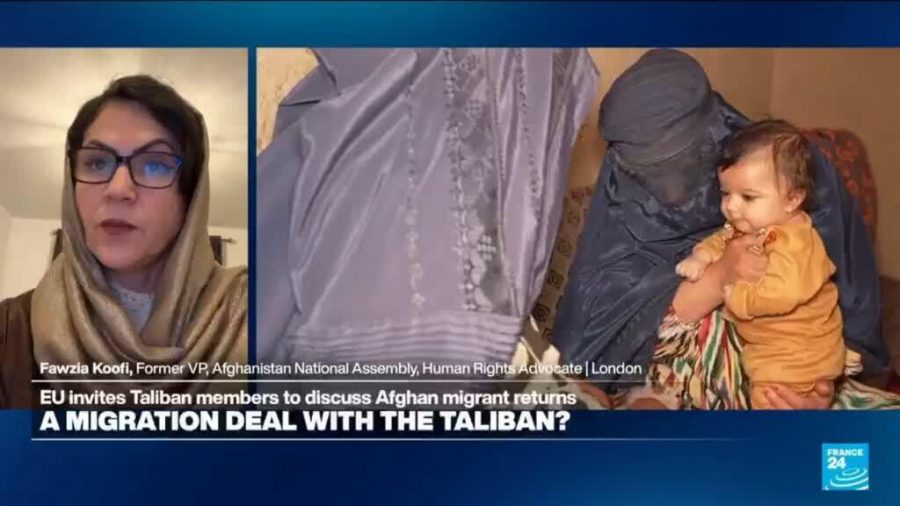
As the Taliban regime continues to enforce stringent laws that restrict the rights of women and girls in Afghanistan, the invitation from the EU is seen as a troubling sign. Fawzia Koofi, a prominent Afghan politician and former Vice President of Afghanistan’s National Assembly, expressed her concerns in an interview with FRANCE 24. She stated, “Inviting the Taliban sends the wrong signal to anyone that is using power as a means of suppression.” This sentiment is echoed by numerous human rights advocates who fear that such diplomatic overtures may embolden oppressive regimes worldwide.
Concerns Over Normalization of the Taliban Regime
The Taliban’s return to power in Afghanistan has been marked by a rollback of fundamental rights, particularly affecting women and girls. Following their takeover in August 2021, the regime swiftly implemented policies that barred girls from attending school and restricted women from participating in public life. The invitation from the EU is perceived as an attempt to engage with a government that has shown little regard for human rights, raising questions about the message it sends to both the Taliban and other authoritarian regimes.
International Reactions and Calls for Action
The backlash against the EU’s decision has been swift and widespread. Human rights organizations, including Amnesty International and Human Rights Watch, have called on the European Commission to reverse its invitation. They argue that engaging with the Taliban under the current circumstances not only undermines the struggle for human rights in Afghanistan but also sets a dangerous precedent for international diplomacy.
- Normalization of Oppression: Critics warn that engaging with the Taliban could normalize their regime, allowing them to gain international legitimacy.
- Impact on Afghan Women: The invitation disregards the plight of Afghan women who continue to suffer under the Taliban’s repressive rule.
- Global Implications: The EU’s approach could embolden other authoritarian regimes to suppress dissent and violate human rights without fear of international repercussions.
The Broader Context of EU Migration Policy
The discussions in Brussels are framed within the context of the EU’s ongoing challenges with migration, particularly in light of the humanitarian crisis stemming from Afghanistan. As European countries grapple with an influx of migrants, the Commission’s strategy to engage the Taliban appears to be a pragmatic approach aimed at managing deportations.
However, critics argue that prioritizing migration control over human rights risks compromising the EU’s core values. As the bloc seeks to navigate the complexities of its migration policy, the need for a balanced approach that respects human rights must remain at the forefront of its decisions.
Conclusion: A Call for Ethical Diplomacy
The EU’s invitation to the Taliban poses significant ethical dilemmas. With human rights organizations sounding the alarm, there is a growing consensus that any diplomatic engagement with a regime that systematically suppresses its citizens must be approached with extreme caution. As the situation unfolds, the EU faces mounting pressure to uphold its commitment to human rights and to ensure that its actions do not inadvertently legitimize oppressive regimes.