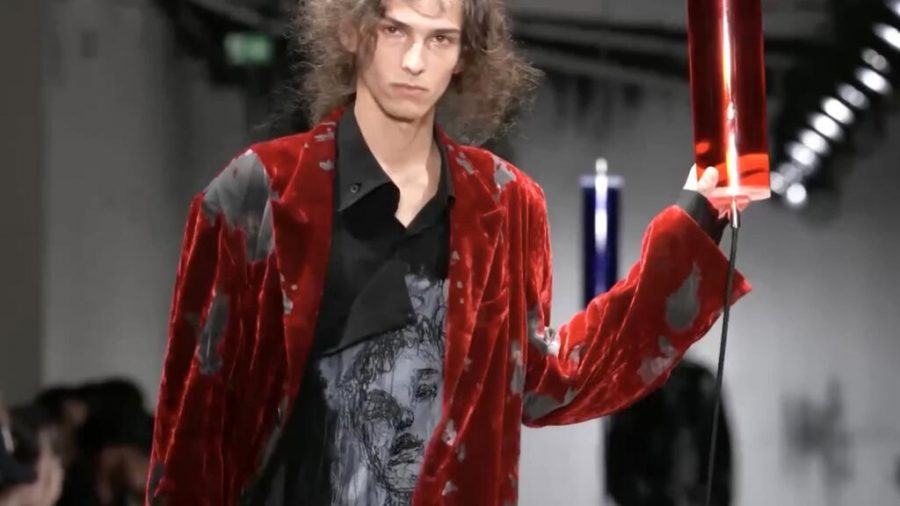
The Spring-Summer 2027 menswear season has ignited a sense of urgency among designers, as they confront the looming threats of climate change and rising populism. With freedom of expression under siege, the fashion world can no longer afford to look away, and this season’s collections reflect a growing desire to challenge the status quo and propose a more sustainable future.
Designers Take a Stand
Yohji Yamamoto’s latest collection is a testament to the devastating impact of climate change, with clothes that appear scorched by the sun. The Japanese designer’s use of distressed fabrics and uneven hems serves as a powerful metaphor for a planet on the brink of collapse. Meanwhile, Issey Miyake’s celebration of the power of shadow offers a more nuanced approach, highlighting the importance of subtlety and restraint in a world that often values excess over sustainability.
A Call to Action
Other designers, such as Jeanne Friot, are taking a more confrontational approach, using their collections to indict the politicians and policymakers who have failed to address the climate crisis. Friot’s use of bold graphics and stark imagery serves as a powerful critique of the systemic failures that have led to our current predicament. The Institut Français de la Mode is also urging its students to push beyond the limits of conventional fashion design, encouraging them to explore new materials, technologies, and approaches that prioritize sustainability and social responsibility.
Challenging Western Dress Codes
KML, the Saudi-born label, is dismantling Western dress codes and proposing a new vision for menswear that blends traditional Middle Eastern styles with modern streetwear silhouettes. This approach not only challenges the dominant fashion paradigms but also highlights the importance of cultural exchange and diversity in shaping a more sustainable and equitable future. As the fashion world continues to evolve, it is clear that designers will play a crucial role in shaping the conversation around climate change, social justice, and cultural identity.
Key Takeaways
- Climate change is a pressing concern for the fashion industry, with many designers incorporating sustainable materials and practices into their collections.
- Rising populism threatens freedom of expression, and designers are responding by using their platforms to challenge systemic failures and promote social responsibility.
- Cultural diversity and exchange are essential for shaping a more sustainable and equitable future, and designers are increasingly looking to non-Western cultures for inspiration and guidance.
As the fashion world moves forward, it is clear that the Spring-Summer 2027 menswear season will be remembered as a turning point in the industry’s response to the climate crisis. With designers proposing a range of innovative solutions and approaches, from sustainable materials to cultural exchange, it is up to consumers and policymakers to support and amplify these efforts, working towards a more livable future for all.