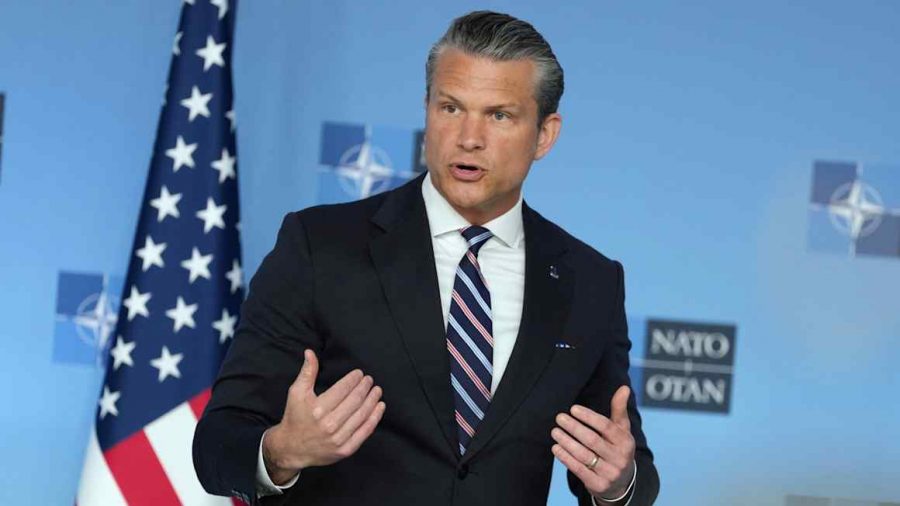
Hegseth Announces Six-Month Review of U.S. Military Presence in Europe
In a significant move that underscores the evolving dynamics of global military strategy, Defense Secretary Pete Hegseth has unveiled a comprehensive six-month review of the United States military presence in Europe. This announcement comes amid rising tensions and a critical call for NATO allies to bolster their support for U.S. initiatives, particularly in the context of ongoing conflicts in the Middle East.
The Context of the Review
The review was announced during a press conference held at the Pentagon, where Hegseth emphasized the necessity for a strategic reassessment of U.S. forces stationed in Europe. “The geopolitical landscape is shifting rapidly, and we must ensure that our military posture in Europe is aligned with our national security objectives,” he stated.
Hegseth’s remarks also included a pointed critique of NATO allies who have not met their defense spending commitments, particularly in light of the ongoing tensions with Iran. He expressed disappointment over what he described as a lack of engagement from allied nations during the current conflict, urging them to take more responsibility in regional security efforts.
NATO Allies Under Scrutiny
As Hegseth’s review unfolds, NATO allies are facing increasing scrutiny regarding their commitment to collective defense. The Secretary highlighted that while the U.S. has consistently played a pivotal role in defending democratic values and freedoms in Europe, the burden of this commitment should not fall solely on American shoulders.
- Military Funding: NATO members are encouraged to meet the 2% GDP defense spending guideline.
- Shared Responsibilities: Allies must contribute more actively to collective operations and security initiatives.
- Geopolitical Stability: The review aims to enhance stability against potential threats from adversarial nations.
Implications for U.S. Forces in Europe
This six-month review will not only evaluate troop levels but also assess the strategic locations of U.S. forces across Europe. With tensions escalating concerning Russia’s actions and the instability in the Middle East, the review is expected to provide recommendations that could lead to troop realignments or increased military cooperation with European allies.
Furthermore, Hegseth hinted at potential enhancements in military infrastructure, which could involve upgrades to bases and improved logistics to facilitate rapid deployment capabilities. “We must be prepared for any scenario, and that means ensuring our forces are not only present but also well-equipped and ready to respond,” he added.
The Broader Impact on Global Security
The implications of this review extend beyond European borders. The U.S. military’s presence in Europe has historically acted as a deterrent against aggression from hostile nations, and any changes could shift the balance of power in the region. Experts warn that a diminished U.S. presence might embolden adversaries, leading to further instability.
As the review progresses, it will be closely monitored by global leaders and military analysts alike. Hegseth emphasized that the findings will not only reflect the current state of U.S. military readiness in Europe but will also set the tone for future engagements and alliances.
Conclusion
As Defense Secretary Hegseth moves forward with this pivotal review, the eyes of the world will remain focused on how the United States recalibrates its military strategy in Europe. The call for greater accountability among NATO allies is a clear signal that U.S. leadership in global security may be entering a new phase, one that necessitates stronger collaboration and shared responsibility.