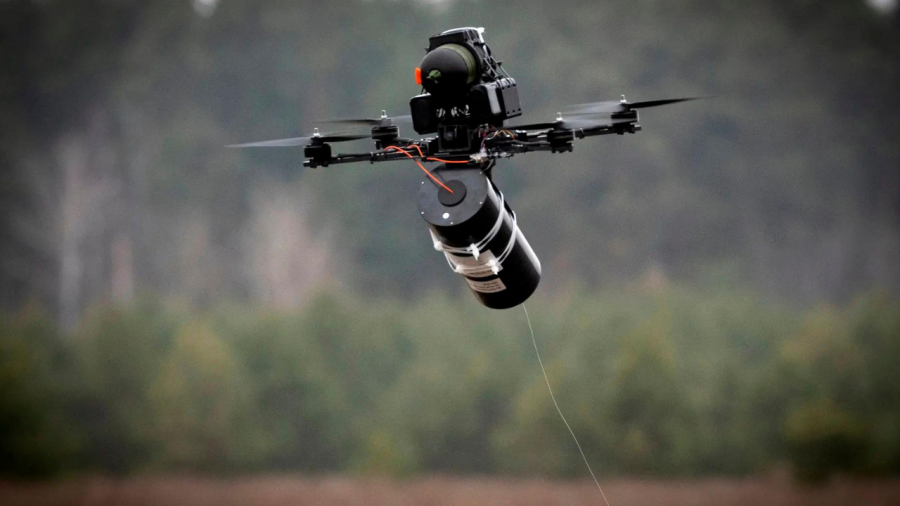
Hezbollah’s deployment of low-cost, fibre-optic drones is reshaping the battlefield in southern Lebanon, presenting a formidable challenge to Israeli forces. These untraceable, low-tech devices are forcing the Israeli military to rethink its tactics as the group leverages perceived vulnerabilities in Israeli defenses.
Hezbollah’s Tactical Innovation
In recent months, Hezbollah has been increasingly employing inexpensive drones, which are not only easy to produce but also difficult to detect and counter. Unlike traditional drones that rely on GPS technology, these fibre-optic drones utilize a more primitive guidance system, making them less susceptible to jamming and interception. This innovation has given Hezbollah a tactical advantage, allowing them to conduct surveillance, gather intelligence, and even launch attacks with relative anonymity.
Challenges for Israeli Forces
The introduction of these drones has forced the Israeli Defense Forces (IDF) to adapt their strategies in real-time. With the limitations of conventional counter-drone technologies, Israeli military planners are now tasked with developing new methods to neutralize these threats. The IDF has historically maintained technological superiority in the region, but the rise of Hezbollah’s drones is challenging that status quo.
Domestic Manufacturing and Strategic Implications
Hezbollah’s ability to manufacture these drones domestically reflects a significant shift in the group’s operational capabilities. By producing their own drones, Hezbollah minimizes reliance on external suppliers and enhances its autonomy on the battlefield. This development not only bolsters the group’s military capabilities but also poses a strategic challenge for Israel, which must now contend with a more self-sufficient adversary.
The Impact on Civilian Areas
The use of drones in conflict zones raises important questions about civilian safety and the potential for collateral damage. As Hezbollah continues to deploy these drones for reconnaissance and potential offensive operations, the risk to civilian populations in southern Lebanon increases. The IDF has expressed concerns about the potential for these drones to target Israeli settlements, further complicating an already tense situation.
International Reactions and Concerns
The implications of Hezbollah’s drone strategy extend beyond the immediate conflict. International observers are increasingly concerned about the proliferation of low-cost drone technology among non-state actors. The accessibility of such technology could empower various militant groups worldwide, potentially altering the landscape of modern warfare.
Conclusion: A New Era of Warfare
As Hezbollah continues to innovate and adapt, the conflict between Israel and the group is entering a new era characterized by the use of unconventional warfare tactics. The challenges posed by these low-cost drones are forcing the Israeli military to rethink its approach, demonstrating that in modern warfare, even the most advanced technology can be effectively countered by innovative tactics and resourcefulness.
- Hezbollah’s drones are cheap and easy to manufacture.
- They threaten Israeli military superiority in the region.
- The rise of drone warfare poses risks to civilian populations.
- International concerns are growing over the proliferation of drone technology among militant groups.