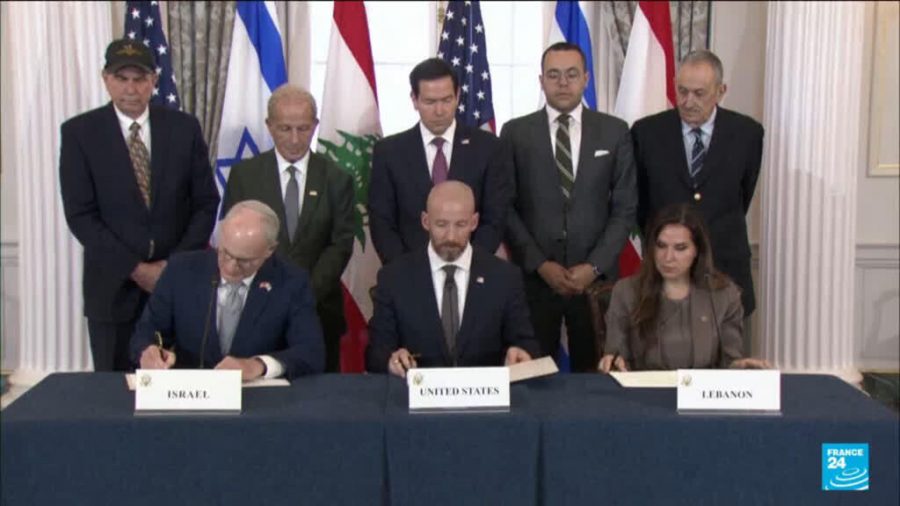
Historic Agreement Signed Between US, Lebanon, and Israel
In a significant diplomatic development, the Israeli and Lebanese ambassadors announced an agreement on Friday that is being hailed as a crucial step towards peace. This agreement comes after months of escalating tensions and cross-border confrontations between Israeli forces and the Lebanese militant group Hezbollah.
A Long-Awaited Breakthrough
The deal represents a potential breakthrough in the ongoing efforts to stabilize the region and reduce hostilities that have plagued Lebanon and Israel for decades. The announcement was made during a press conference held in Washington, D.C., where officials from the three nations gathered to discuss the significance of the agreement.
Details of the Agreement
While specific details of the agreement have not been fully disclosed, sources indicate that it includes provisions aimed at reducing military engagements and fostering dialogue between the opposing sides. Diplomatic channels will be re-established, and both countries have committed to a series of meetings facilitated by U.S. officials to ensure compliance and monitor progress.
- Reduction of Hostilities: The agreement seeks to establish a framework for reducing military confrontations between Israel and Hezbollah.
- Dialogue Initiatives: Both sides are expected to engage in regular dialogue to address grievances and prevent future escalations.
- U.S. Involvement: The United States will play a crucial role in mediating discussions and helping to maintain peace in the region.
Reactions to the Agreement
The announcement has been met with cautious optimism from international observers. Many believe that this agreement could pave the way for a more stable relationship not only between Israel and Lebanon but also in the broader Middle East. However, skepticism remains, particularly regarding Hezbollah’s commitment to the ceasefire and dialogue process.
“This is a significant step in the right direction,” stated Camille Knight, a regional analyst. “But the real test will be whether both sides can stick to the terms of the agreement and whether they can truly engage in meaningful dialogue moving forward.”
Historical Context
The relationship between Israel and Lebanon has been fraught with tension, particularly since the 2006 Lebanon War, which saw intense fighting between Israeli forces and Hezbollah. Since then, the region has experienced intermittent violence, with both sides accusing each other of provocations.
Hezbollah, a Shiite militant group backed by Iran, has long positioned itself as a defender of Lebanon against Israeli aggression. However, its actions and the ongoing conflict have led to significant humanitarian crises and economic instability in Lebanon. The recent escalations in violence have prompted calls for renewed diplomatic efforts.
Next Steps
As the dust settles on the announcement, both the Israeli and Lebanese governments are expected to engage in internal discussions about the implications of the agreement. Meanwhile, U.S. officials are likely to ramp up their diplomatic efforts to ensure that all parties adhere to the terms set forth in the agreement.
- Internal Discussions: Both governments will need to garner support from their constituents regarding the agreement.
- Diplomatic Engagement: The U.S. aims to facilitate further talks and monitor adherence to the agreement.
- Public Sentiment: How citizens in both Israel and Lebanon perceive this agreement will play a crucial role in its success.
Conclusion
The signing of this agreement marks a pivotal moment in the long-standing conflict between Israel and Lebanon, offering a glimmer of hope for peace in a region historically defined by strife. As the world watches closely, it remains to be seen whether this agreement can lead to lasting stability and improved relations between the two nations.