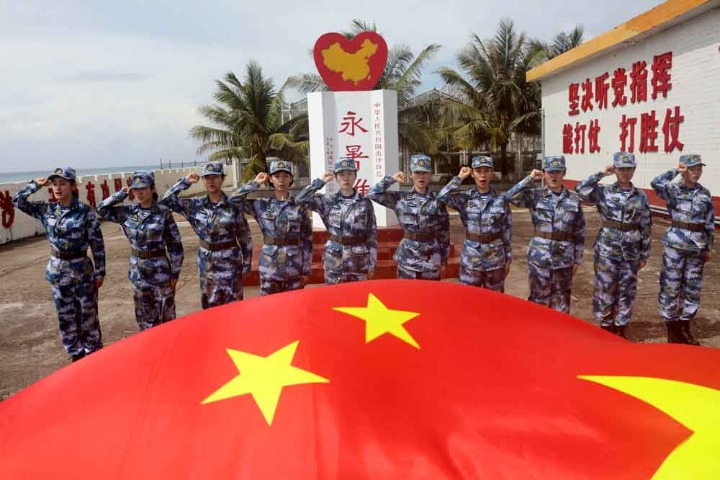
In a historic move, the People’s Liberation Army (PLA) Navy has stationed 10 female personnel on the Nansha Islands in the South China Sea, marking the first time women have been deployed to this strategic yet contested region. The deployment underscores the growing role of women in China’s armed forces as the country continues to modernize its military capabilities.
Breaking Barriers in a Male-Dominated Sphere
The PLA Navy’s announcement highlights a significant step forward in gender integration within one of the world’s largest militaries. While women have long served in non-combat roles, their assignment to the frontlines in the South China Sea speaks to evolving military strategies and the increasing recognition of women’s contributions in defense and security.
The Nansha Islands, also known as the Spratly Islands, have been a focal point of territorial disputes involving multiple nations, including China, the Philippines, Vietnam, and Malaysia. The deployment of female personnel to this region signals China’s determination to maintain its strategic presence while also showcasing its commitment to gender equality in traditionally male-dominated roles.
Life on the Nansha Islands
Being stationed on the Nansha Islands presents unique challenges. Located far from the Chinese mainland, the islands are often described as remote and isolated. Personnel stationed there endure harsh weather conditions, limited resources, and the emotional toll of separation from their families. For the 10 women now stationed there, these challenges are compounded by the fact that they are breaking new ground in a setting where no women have served before.
According to the PLA Navy, the female personnel have undergone rigorous training to prepare for their new roles. They are expected to carry out the same responsibilities as their male counterparts, which include patrolling the islands, conducting routine drills, and ensuring the security of the region.
Strategic and Symbolic Implications
Experts suggest that the timing of this deployment is no coincidence. The South China Sea remains a hotspot for geopolitical tensions, with nations vying for control over its rich natural resources and strategic maritime routes. By including women in its garrison, China is not only signaling its military readiness but also its commitment to modernizing its forces in line with global trends.
Moreover, the deployment is likely to resonate domestically, as it aligns with broader efforts to promote gender equality and women’s empowerment under President Xi Jinping’s leadership. This move may inspire more women to pursue careers in defense and other traditionally male-dominated sectors.
Global Reactions
The international community is watching the development closely, given the contentious nature of the territorial disputes in the South China Sea. While some may view the deployment as a symbolic gesture, others see it as part of China’s broader strategy to consolidate its claims in the region.
Critics argue that the move could further escalate tensions with neighboring countries. However, proponents of gender equality have praised the PLA Navy for taking steps to include women in critical roles, emphasizing the importance of diverse perspectives in security and defense.
Looking Ahead
The deployment of female personnel to the Nansha Islands is a landmark moment for the PLA Navy and a significant step forward in the integration of women into frontline military roles. As these women begin their historic mission, they serve as pioneers, paving the way for future generations of female soldiers to take on more challenging and high-profile roles within China’s armed forces.
Whether this move will have broader implications for the region remains to be seen, but one thing is clear: the role of women in the military is evolving, and their contributions are becoming increasingly indispensable in shaping the future of national and global security.