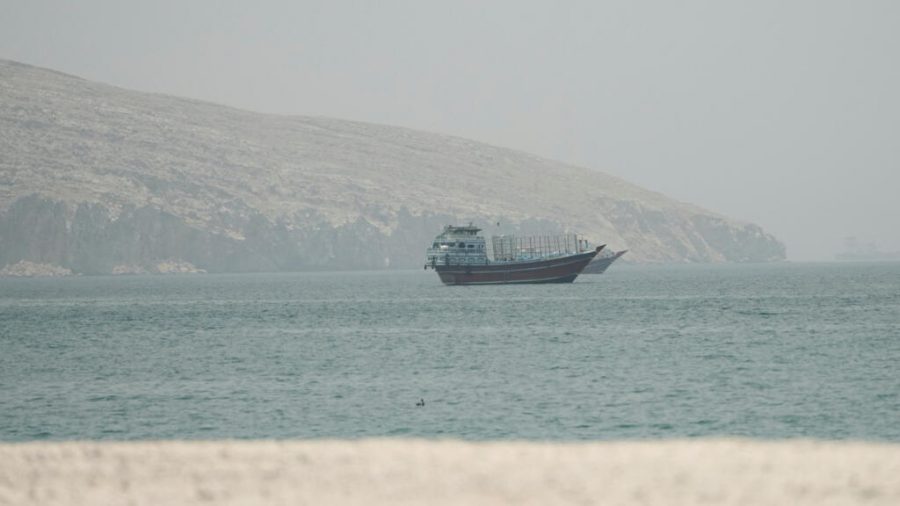
Iran’s Strait of Hormuz Warning: A Delicate Balance of Power
The Middle East is on high alert as Iran’s Revolutionary Guards issued a stern warning to vessels attempting to cross the Strait of Hormuz without Tehran’s authorization. This move comes as top US diplomat Marco Rubio visits Bahrain, reassuring Gulf allies that Washington will protect their interests amidst efforts to broker a final settlement to end the war with Iran.
Strait of Hormuz: A Critical Waterway
The Strait of Hormuz is a vital waterway connecting the Persian Gulf to the Gulf of Oman, with approximately 20% of the world’s oil passing through it. The strait’s narrow passage, measuring just 21 miles at its widest point, makes it a critical chokepoint for international trade and a potential flashpoint for conflict.
Iran’s Revolutionary Guards: A Powerful Force
Iran’s Revolutionary Guards are a powerful and elite force, responsible for protecting the country’s interests and maintaining its national security. The Guards have been involved in various military operations, including the seizure of foreign vessels, and have been known to take a hardline stance against perceived threats to Iran’s sovereignty.
US Involvement: A Complex Web of Interests
The United States has a long history of involvement in the Middle East, with a complex web of interests and alliances that often put it at odds with Iran. The US has a significant military presence in the region, with bases in Bahrain, Qatar, and the United Arab Emirates, and has been working to strengthen its relationships with Gulf allies.
Marco Rubio’s Visit: A Show of Support
Marco Rubio’s visit to Bahrain is seen as a show of support for Gulf allies, who are increasingly concerned about Iran’s growing influence in the region. The US diplomat has promised that Washington will protect their interests and work to hammer out a final settlement to end the war with Iran.
Implications and Consequences
The implications of Iran’s warning are far-reaching, with potential consequences for global trade, regional stability, and international relations. A confrontation between Iran and the US could have devastating consequences, including:
- Disruption of global oil supplies: A blockade of the Strait of Hormuz could lead to a significant increase in oil prices, having a ripple effect on the global economy.
- Regional instability: A conflict between Iran and the US could destabilize the entire region, leading to a surge in terrorism, extremism, and violence.
- International tensions: A confrontation between Iran and the US could lead to a deterioration in international relations, making it more challenging to address global challenges such as climate change, pandemics, and economic inequality.
As the situation continues to unfold, the international community is holding its breath, hoping that diplomacy and dialogue will prevail over confrontation and conflict.