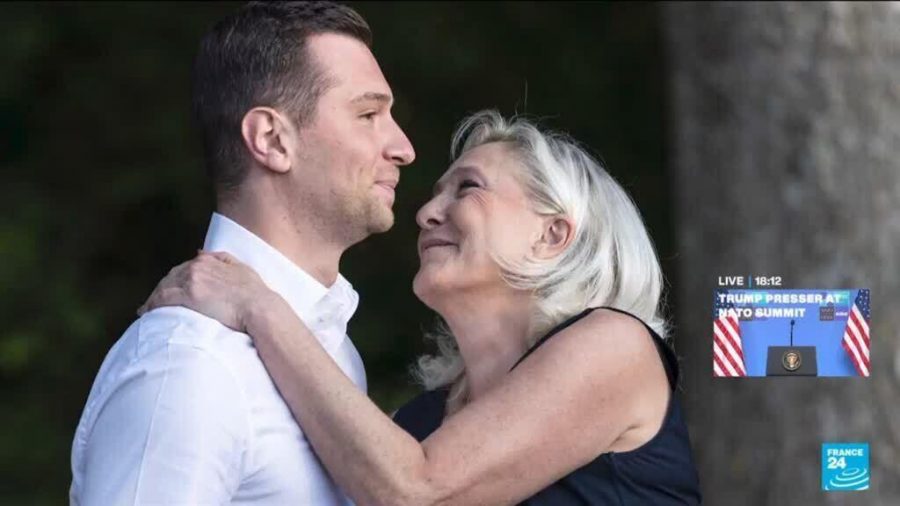
Le Pen’s Presidential Ambitions Amid Controversy
In a bold move that has drawn both support and skepticism, Marine Le Pen, the prominent leader of France’s hard-right political landscape, has announced her candidacy for the upcoming presidential elections. This decision comes despite her recent conviction on embezzlement charges, a legal cloud that might have deterred lesser politicians. Le Pen is not just running for office; she is positioning Jordan Bardella, her political protégé, as her potential prime minister, signaling her intent to maintain a strong grip on the party’s future direction.
The Political Heir: Jordan Bardella
Jordan Bardella, a rising star within Le Pen’s National Rally party, has been groomed for leadership since his election to the European Parliament in 2019. At just 28 years old, he has quickly become a prominent figure in French politics, representing a younger, more dynamic face of the far-right movement. Le Pen’s endorsement of Bardella as her future prime minister marks a crucial step in the generational shift within the party, but it raises important questions about their ideological alignment.
Shifting Dynamics: Are They on the Same Page?
While Le Pen and Bardella share a common objective of advancing the National Rally’s agenda, recent developments suggest that their visions for the party’s future may not be completely aligned. Observers have noted a growing divergence in their stances on key issues, which could complicate their partnership leading up to the elections.
- Immigration Policies: Le Pen has long championed strict immigration controls, a cornerstone of her political identity. Bardella, however, has begun to advocate for a more nuanced approach, focusing on integration and societal cohesion, signaling a potential shift in party rhetoric.
- Economic Strategies: Le Pen’s economic policies have traditionally leaned towards protectionism and prioritizing French industry. Bardella, on the other hand, has expressed a desire to engage more with European markets, hinting at a more global perspective that could attract a broader voter base.
- Social Issues: While both politicians share conservative views, Bardella has shown a willingness to engage in dialogue about social policies, including LGBTQ+ rights, which may contrast with Le Pen’s more traditional stances.
Public Perception and Political Strategy
The relationship between Le Pen and Bardella is under constant scrutiny, especially as the elections approach. For many voters, the alignment of the party’s leadership will be a determining factor in their support. Le Pen’s long-standing reputation as a hardliner may clash with Bardella’s attempts to soften the party’s image, which could either attract new voters or alienate the traditional base.
Future Implications for the National Rally
As Le Pen embarks on this campaign trail, her ability to navigate the evolving dynamics with Bardella will be critical. If they can successfully align their visions, the National Rally could emerge stronger than ever. However, if their differences continue to grow, it may lead to fractures within the party, complicating their chances in the elections.
In conclusion, Marine Le Pen’s presidential bid serves as a litmus test not only for her political future but also for the future of the National Rally. With Jordan Bardella by her side, the duo faces the challenge of reconciling their differing views while appealing to a diverse electorate that is increasingly vocal about the need for change.