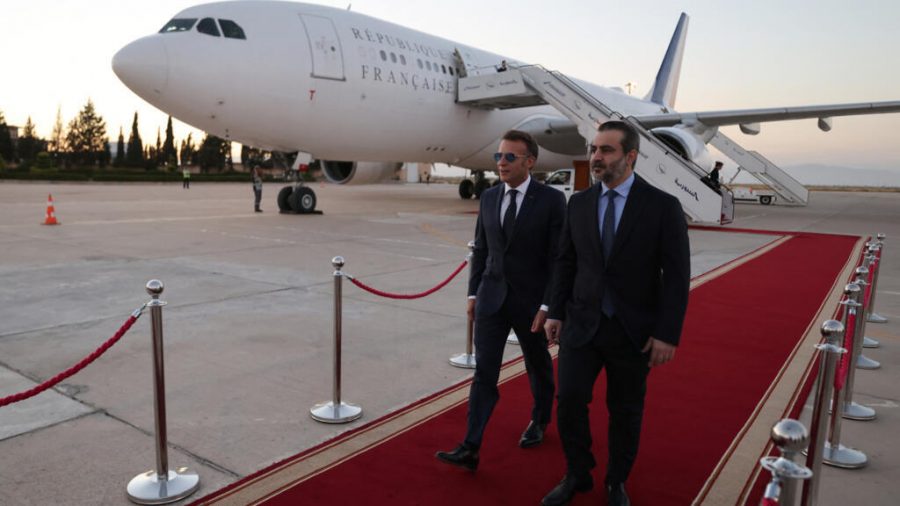
Macron’s Historic Visit to Damascus: A New Chapter in Franco-Syrian Relations
In a significant diplomatic maneuver, French President Emmanuel Macron is set to embark on a visit to Damascus, marking the first trip by a French head of state to Syria since Nicolas Sarkozy met with the ousted President Bashar al-Assad in 2009. This visit comes amid a complex backdrop of geopolitical developments, including Iran’s mourning for its late Supreme Leader and Hamas’s announcement of disarmament. As tensions in the Middle East continue to evolve, Macron’s visit raises critical questions about France’s role in the region and the future of Franco-Syrian relations.
The Context of the Visit
Macron’s decision to visit Syria is laden with significance, occurring at a time when the region grapples with shifting alliances and power dynamics. Iran is currently in a period of mourning after the death of its Supreme Leader, while Hamas, the Palestinian militant group, has declared its intention to disarm—a move that could reshape the landscape of Palestinian politics.
As these events unfold, Macron’s visit is seen as a potential pivot point in France’s foreign policy towards Syria. With the Syrian civil war entering its 13th year, the country remains in a state of devastation, and its reconstruction has become a focal point for international discussions.
Objectives of Macron’s Visit
The primary aim of Macron’s visit appears to be to engage with the Syrian government in an effort to address humanitarian issues and explore avenues for political stability. The French President has expressed a desire to revive dialogue with the Syrian leadership, particularly with Foreign Minister Ahmed al-Sharaa. By doing so, Macron hopes to facilitate a resolution to the ongoing crisis and to lay the groundwork for future cooperation.
- Humanitarian Concerns: One of the main objectives of Macron’s visit is to address the dire humanitarian situation in Syria. Millions of people continue to suffer from the ramifications of the civil war, and France has been vocal about the need for international assistance and reconstruction efforts.
- Political Dialogue: Macron aims to initiate a dialogue that could lead to a political solution in Syria. Engaging directly with the Assad regime may open channels for negotiations that have been largely absent in recent years.
- Regional Stability: The visit comes at a time when regional stability is precarious. Macron’s engagement with Syria may represent a broader strategy to stabilize the region, particularly amidst the backdrop of Iranian influence and the evolving relationships among Middle Eastern nations.
The Reaction from the International Community
Macron’s impending visit has garnered mixed reactions internationally. Critics argue that engaging with Assad could legitimize a regime accused of numerous human rights violations, while supporters believe that dialogue is essential for any progress towards peace and stability.
Analysts suggest that Macron’s visit could signal a shift in the West’s approach to Syria, moving from isolation to engagement. This could potentially open the door for other countries to reconsider their stances as well.
Conclusion: A Pivotal Moment for Franco-Syrian Relations
Macron’s visit to Damascus represents a pivotal moment in Franco-Syrian relations and could have lasting implications for the geopolitical landscape of the Middle East. As he prepares to meet with Ahmed al-Sharaa, the world will be watching to see how this encounter unfolds and what it might mean for the future of Syria and its place in the international community.