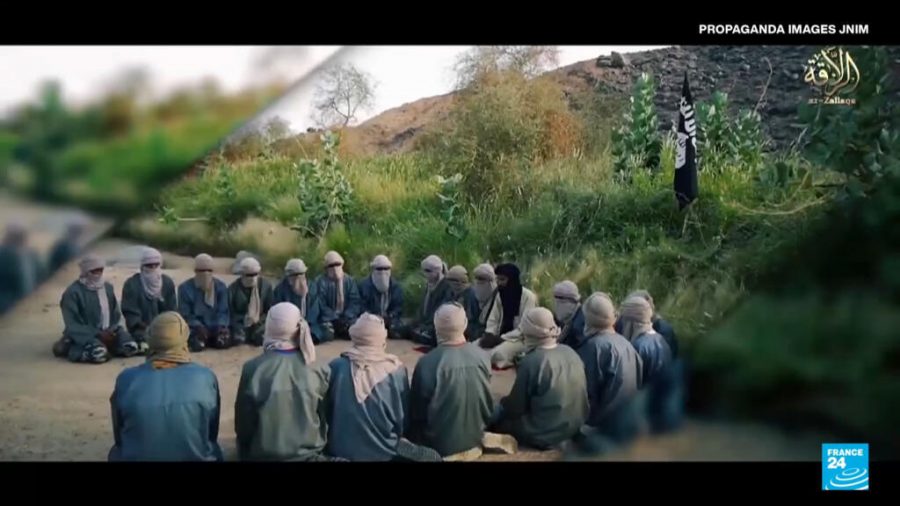
Mali, a landlocked country in the Sahel region of West Africa, has been struggling to regain peace and security due to an over-dependence on military solutions. The current trajectory under Colonel Assimi Goïta reflects a strategic overreliance on military solutions to what is fundamentally a multidimensional conflict. To understand the complexities of the situation, François Picard is pleased to welcome Dr. Folahanmi Aina, a Political Scientist and Lecturer in the Political Economy of Violence, Conflict and Development at SOAS London.
The Interplay Between Militarised Governance and Insurgent Violence
As a researcher of global security and political dynamics, Dr. Aina’s analysis of Mali’s evolving crisis focuses on the interplay between militarised governance, external partnerships, and the persistence of insurgent violence in the Sahel. According to Dr. Aina, the Malian government’s reliance on military solutions has failed to address the root causes of the conflict, which include poverty, inequality, and lack of access to basic services such as healthcare and education.
The Role of External Partnerships
The international community has been involved in efforts to stabilize Mali, with the United Nations Multidimensional Integrated Stabilization Mission in Mali (MINUSMA) being a key player. However, Dr. Aina argues that the external partnerships have often prioritized military solutions over more holistic approaches, exacerbating the problem. The focus on military solutions has led to a lack of investment in critical areas such as economic development, governance, and social services, which are essential for long-term stability and peace.
The Persistence of Insurgent Violence
Despite the military efforts, insurgent violence persists in Mali, with groups such as Al-Qaeda in the Islamic Maghreb (AQIM) and the Islamic State in the Greater Sahara (ISGS) continuing to launch attacks. Dr. Aina attributes the persistence of insurgent violence to the failure of the government to address the grievances of local communities, which have been marginalized and excluded from the political process. The lack of trust between the government and local communities has created a fertile ground for insurgent groups to recruit and operate.
Possible Solutions
To address the crisis in Mali, Dr. Aina recommends a more nuanced approach that takes into account the complex dynamics of the conflict. This includes investing in economic development, governance, and social services, as well as engaging in inclusive dialogue with local communities to address their grievances.
- Investing in economic development to reduce poverty and inequality
- Improving governance to increase transparency and accountability
- Providing access to basic services such as healthcare and education
- Engaging in inclusive dialogue with local communities to address their grievances
By adopting a more comprehensive approach, the Malian government and its external partners can work towards a more sustainable and lasting peace.