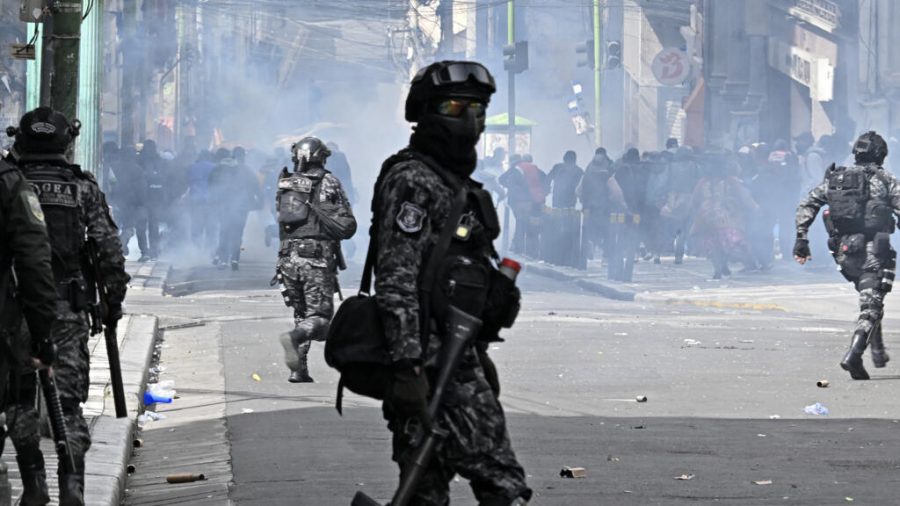
Mass protests engulfed Bolivia’s capital, La Paz, on Friday as riot police deployed tear gas to disperse anti-government demonstrators demanding President Rodrigo Paz step down. The unrest, fueled by a worsening economic crisis, has united diverse factions, including unions and Indigenous groups, in a powerful challenge to the embattled leader’s administration.
Mounting Pressure on President Paz
President Paz, who has faced criticism over his handling of Bolivia’s economic struggles, now confronts a broad coalition of opposition groups. The protests, which have grown in intensity over recent weeks, reflect widespread frustration with rising inflation, unemployment, and perceived government mismanagement. Demonstrators claim that Paz’s policies have disproportionately hurt the country’s most vulnerable populations, including Indigenous communities.
Clashes in La Paz
The streets of La Paz became a battleground on Friday as thousands of protesters gathered to voice their discontent. Riot police responded with tear gas and barricades, attempting to control the swelling crowds. Protesters, waving flags and chanting slogans, called for immediate political reform and accused the government of ignoring their plight.
“We can no longer afford basic necessities,” said Maria Quispe, a protester and mother of three. “The government has failed us, and we demand change now.” Such sentiments were echoed across the city as tensions between authorities and demonstrators escalated.
United Front of Resistance
What sets these protests apart is the unusual alliance between labor unions, student groups, and Indigenous organizations. Historically divided, these groups have come together in a rare show of unity, amplifying their demands for Paz’s resignation. Leaders from these factions argue that the government has not only failed to address the economic downturn but has also sidelined Indigenous voices in national decision-making.
- Unions: Workers have decried stagnant wages and rising costs of living.
- Indigenous Groups: Many claim the government has neglected their needs and undermined their rights.
- Youth Movements: Students have joined the protests, citing a lack of opportunities and growing economic inequality.
Government Response
While President Paz has acknowledged the economic challenges facing the country, he has refused to step down, arguing that his administration is best equipped to navigate the crisis. In a televised address earlier this week, Paz appealed for calm and pledged to implement measures aimed at stabilizing the economy. However, critics claim these promises lack substance and fail to address the root causes of public discontent.
International observers have expressed concern about the escalating situation in Bolivia, with calls for dialogue between the government and opposition groups. However, as protests show no signs of abating, the prospect of a peaceful resolution remains uncertain.
What Lies Ahead?
With tensions at a boiling point, the future of President Paz’s administration hangs in the balance. The coming days will be critical in determining whether the government can quell the unrest and regain public trust, or if the growing wave of dissent will force leadership changes in the Andean nation. For many Bolivians, the stakes could not be higher as they demand answers and action in the face of a deepening crisis.