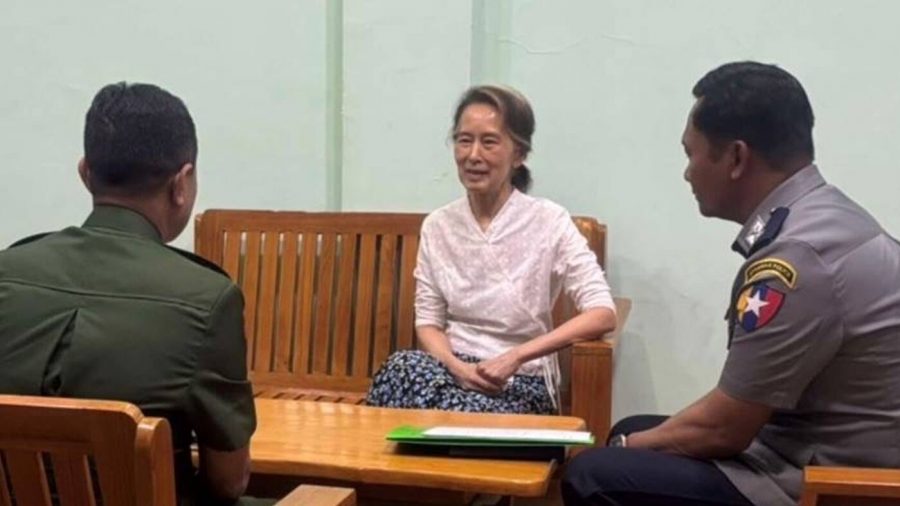
Myanmar’s Image Rehabilitation: Aung San Suu Kyi Moves to House Arrest
In a significant development in Myanmar’s ongoing political saga, state television has announced that Aung San Suu Kyi, the country’s ousted opposition leader, has been transferred from prison to house arrest. This move comes more than five years after the military coup that effectively dismantled the democratic government she helped establish.
The Context of the Transfer
Suu Kyi, a Nobel Peace Prize laureate, was deposed in February 2021 when the military seized control, citing widespread electoral fraud in the November 2020 elections, which her party, the National League for Democracy (NLD), had won by a landslide. Since then, she has been held in detention under various charges, widely regarded by international observers as politically motivated.
The Implications of House Arrest
The transfer to house arrest could be interpreted as a strategic maneuver by Myanmar’s military junta, the Tatmadaw, to soften its image both domestically and internationally. By moving Suu Kyi to house arrest, the regime may be aiming to signal a willingness to engage in dialogue and potentially ease tensions with the opposition and civil society.
- Domestic Reactions: While some in Myanmar may view this development as a positive step, many remain skeptical about the military’s true intentions. Activists and opposition leaders have expressed concern that the move is merely a façade, designed to placate international criticism without yielding genuine political reform.
- International Perspectives: The international community, particularly Western nations, has long called for Suu Kyi’s release and the restoration of democracy in Myanmar. Observers are closely monitoring this situation, as any genuine move towards reconciliation or democratization will likely hinge on the junta’s subsequent actions.
- Potential for Dialogue: The change in Suu Kyi’s detention status could open avenues for dialogue between the junta and various stakeholders, including ethnic armed groups and pro-democracy activists. However, historical precedents suggest that the military may be reluctant to cede power or engage in meaningful negotiations.
The Road Ahead
As Myanmar navigates this complicated political landscape, the potential for further unrest remains high. Protests against military rule have been ongoing, with many citizens risking their safety to voice their dissent. The National Unity Government (NUG), a parallel government formed by ousted lawmakers, continues to advocate for international recognition and support in their struggle against the junta.
While the transfer to house arrest may provide a glimmer of hope for some, it is essential to recognize the broader implications for Myanmar’s future. The military’s continued hold on power, coupled with widespread human rights abuses and a deteriorating economic situation, paints a grim picture for the nation’s trajectory.
Conclusion
As the world watches closely, the developments surrounding Aung San Suu Kyi and the military junta will be pivotal in shaping Myanmar’s path forward. The question remains: will this be a genuine attempt at reconciliation, or merely another chapter in a protracted struggle for democracy?