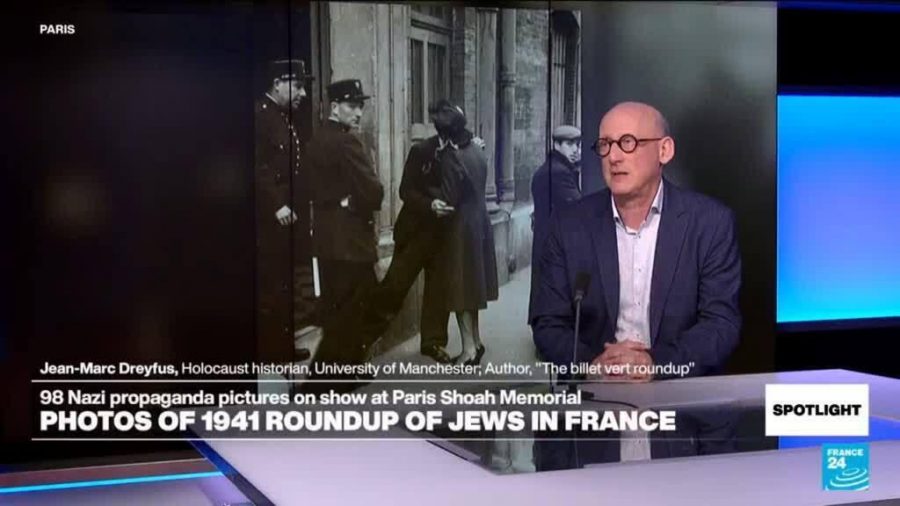
Revelation in Holocaust History: The May 1941 Roundup
In a remarkable breakthrough for Holocaust historiography, a collection of 98 previously unknown photographs documenting the May 14, 1941, roundup of foreign Jews in Paris has surfaced, offering a poignant glimpse into a harrowing chapter of history that many have forgotten. Dr. Jean-Marc Dreyfus, a distinguished historian and professor of modern history at the University of Manchester, has played a pivotal role in bringing this significant discovery to light. As the Chief Editor of ‘La Revue d’Histoire de la Shoah’ and a curator at the Shoah Memorial in Paris, Dreyfus emphasizes the importance of these images, which he describes as “a real discovery for history, for our memory.”
The Context of the Roundup
The May 1941 roundup occurred nearly a year before the more notorious Vel’ d’Hiv roundup in July 1942, which saw thousands of Jewish families arrested and deported to concentration camps. The newly discovered photographs provide a minute-by-minute account of the events leading up to this significant moment in the history of Nazi-occupied France. These images serve not only as documentation but as a powerful reminder of the lives disrupted and destroyed during this dark period.
Significance of the Discovery
Dr. Dreyfus highlights the photographs as a critical piece of the puzzle in understanding the systematic persecution of Jews in France. “These images are not just historical documents; they are testimonies of human suffering and resilience,” he states. They capture the chaos and despair experienced by individuals and families during the roundup, shedding light on a narrative that has often been overshadowed in the broader context of the Holocaust.
Exhibition at the Shoah Memorial
The exhibition at the Shoah Memorial in Paris, which showcases these photographs, is designed to educate the public about this lesser-known event and its implications. Visitors can engage with the images, each telling a story that resonates deeply with the themes of loss, remembrance, and the importance of historical accountability.
- Highlighting Forgotten Histories: The photographs serve to remind us of the many untold stories within the broader narrative of the Holocaust.
- Educating Future Generations: By showcasing these images, the exhibit aims to foster a deeper understanding of the events that led to the Holocaust.
- Encouraging Reflection: The stark realities captured in these photographs compel viewers to confront the past and reflect on its relevance today.
Dr. Dreyfus’s Perspective
As a historian dedicated to the study of the Holocaust, Dr. Dreyfus expresses hope that these photographs will spark renewed interest in this period and encourage more comprehensive discussions about memory and history. “We must continue to ask questions about our past,” he insists, “not only to honor those who suffered but to ensure that such atrocities never happen again.” His work, combined with the visual impact of these newly uncovered photographs, aims to keep the memory of the Holocaust alive and relevant for current and future generations.
Conclusion: A Call to Remember
The revelation of these photographs represents an essential step in Holocaust remembrance and education. They remind us of the importance of preserving history, understanding its lessons, and ensuring that the stories of those who endured unimaginable suffering are not forgotten. As the world continues to grapple with issues of discrimination and intolerance, the significance of these images resonates more than ever.