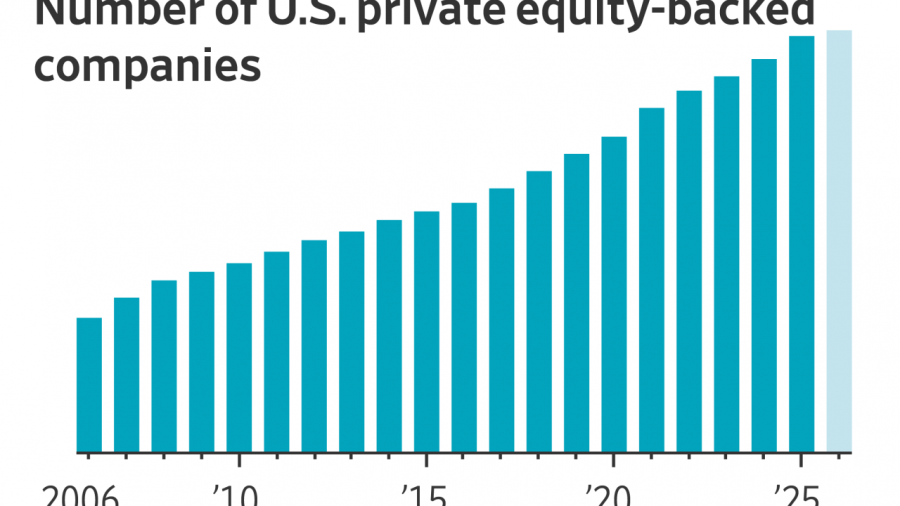
Private Equity Firms Struggle with Exit Strategies
In an unprecedented turn of events, private-equity firms are currently grappling with a staggering backlog of software holdings, some dating back as far as nine years. This backlog comes at a time when investor apprehensions surrounding artificial intelligence (AI) are complicating efforts to exit these investments.
The Impact of AI on Investment Decisions
As AI continues to evolve, its implications for various sectors are becoming increasingly pronounced. Investors are particularly wary of how AI technologies could disrupt existing business models, especially within the software industry. This uncertainty is causing private-equity firms to reconsider their exit strategies, leading to a prolonged holding period for many software assets.
Rising Concerns Among Investors
The concerns surrounding AI are multifaceted. On one hand, there is excitement about the potential of AI to transform industries and create new opportunities. On the other hand, investors are concerned about the risks associated with investing in software companies that may struggle to adapt to rapid technological advancements.
- Unpredictable Market Dynamics: The fast-paced nature of AI development means that market dynamics can shift unexpectedly, making it difficult for private-equity firms to predict the future performance of their portfolio companies.
- Valuation Challenges: With the rise of AI, determining the fair market value of software companies has become increasingly complex, creating additional hurdles for exits.
- Investor Sentiment: Many investors are adopting a cautious approach, leading to a slowdown in deal-making activity within the private-equity space.
Long-Term Implications for Private Equity
The backlog of software holdings may have long-term implications for private-equity firms. As these firms struggle to find buyers for their investments, they may be forced to adapt their strategies. This could mean holding onto investments longer than initially planned, or pivoting to different sectors that are less impacted by AI-related uncertainties.
Potential Strategies for Overcoming Backlog
To navigate this challenging landscape, private-equity firms are exploring several strategies:
- Diversifying Portfolios: Firms are looking to diversify their investments across various sectors to mitigate risks associated with AI.
- Enhancing Operational Efficiencies: By improving the operational efficiencies of their portfolio companies, firms hope to boost valuations and attract potential buyers.
- Engaging with Industry Experts: Collaborating with AI experts and thought leaders can provide valuable insights that help firms make informed decisions about their investments.
The Road Ahead
As private-equity firms navigate this nine-year backlog, they face a challenging yet transformative period. The ongoing evolution of AI presents both challenges and opportunities, and how these firms adapt will be crucial in determining their future success. While the current environment is fraught with uncertainty, it also provides a unique opportunity for firms to rethink their approaches and potentially emerge stronger in the face of adversity.