Is South Africa Making Good on its Climate Promises?
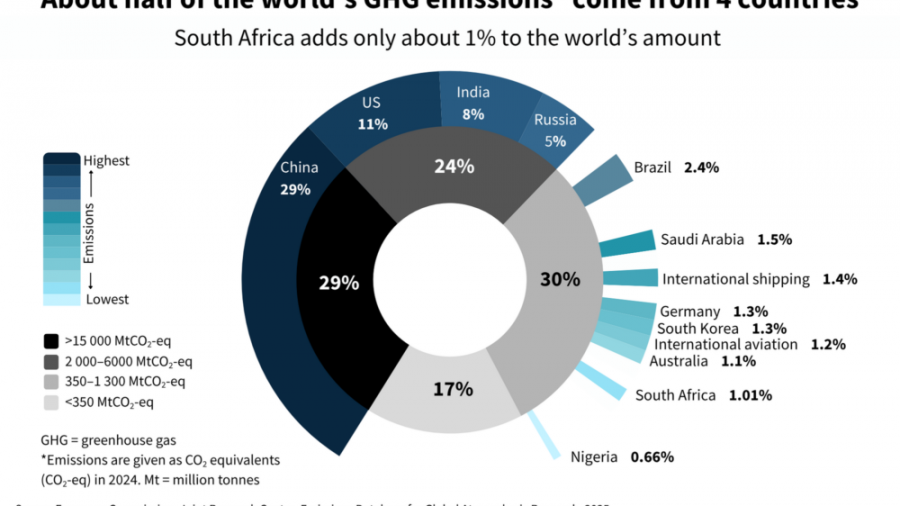
South Africa is aiming to reduce its greenhouse gas emissions and transition to renewable energy sources, and according to recent data, the country is on track to meet its climate goals. The goal is to pump no more than the equivalent of 420 million tonnes of carbon dioxide into the air by 2030, and a loan of about R3.8 billion from Germany is expected to help the country achieve this objective.
The Importance of Reducing Greenhouse Gas Emissions
Greenhouse gas emissions, primarily caused by the burning of fossil fuels such as coal and oil, contribute to global warming and climate change. The emissions form a layer in the Earth’s atmosphere that traps heat from the sun, leading to rising temperatures and changes in weather patterns. Experts predict that climate change will lead to extreme weather events like floods, storms, droughts, and heatwaves becoming more intense and unpredictable, which could have devastating effects on human health, livelihoods, and food production.
Consequences of Climate Change
The consequences of climate change are far-reaching and can have a significant impact on the environment, human health, and the economy. Some of the potential consequences include:
- Extreme weather events: floods, storms, droughts, and heatwaves
- Changes in weather patterns: alterations in rainfall, temperature, and dry spell patterns
- Impact on human health: increased risk of heat-related illnesses, respiratory problems, and water-borne diseases
- Effects on livelihoods: impact on agriculture, forestry, and tourism industries
- Food insecurity: reduced crop yields, changed growing seasons, and increased risk of famine
South Africa’s Climate Change Plans
The South African government has implemented various plans to reduce greenhouse gas emissions and transition to renewable energy sources. The Just Energy Transition Partnership is one such initiative, which aims to help the country switch to renewable energy sources like solar and wind power. The partnership includes a loan of about R3.8 billion from Germany, which will be used to support the country’s energy transition.
Public Awareness and Perception
A recent survey showed that 11% of voters consider climate change to be one of the top three issues when deciding who to vote for. Additionally, 13 of the 15 parties that participated in the survey promised to take action on climate change. With the upcoming local government elections on November 4, it is likely that climate change will remain a key issue on the agenda.
Conclusion
In conclusion, South Africa is making progress in reducing its greenhouse gas emissions and transitioning to renewable energy sources. While there is still much work to be done, the country’s climate change plans and initiatives are a step in the right direction. As the world continues to grapple with the challenges of climate change, it is essential that countries like South Africa remain committed to reducing their emissions and promoting sustainable development.