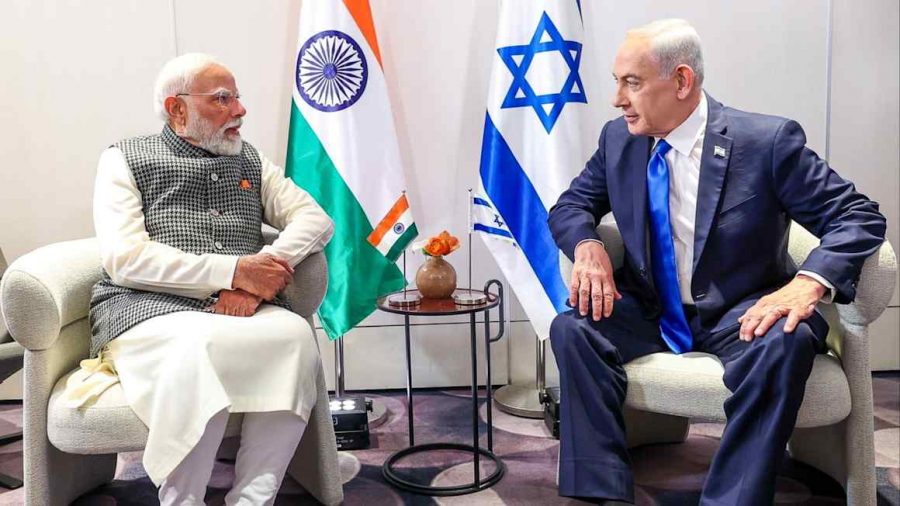
Strengthening Bonds: The Growing Ties Between Modi and Netanyahu
As Israel faces increasing isolation on the global stage, the relationship between Prime Minister Narendra Modi of India and Prime Minister Benjamin Netanyahu of Israel is blossoming. This partnership is characterized by a strategic alignment that spans various sectors, including defense, trade, and cultural exchanges.
Deepening Diplomatic Relations
In recent years, Israel has found itself more isolated, grappling with international condemnation over its policies in the Palestinian territories. In contrast, India, under Modi’s leadership, has emerged as a crucial ally. This partnership is not merely a matter of convenience; it is a calculated move to enhance both nations’ security and economic interests.
Defense Collaborations: Drones and Beyond
One of the most notable areas of collaboration is in defense, where India and Israel have established a robust partnership. The two countries have worked together on developing and producing advanced military technologies, particularly in the realm of unmanned aerial vehicles (UAVs). The Indian Armed Forces have increasingly turned to Israeli firms for drone technology, which has proven to be a game-changer in modern warfare.
- Joint development of UAVs
- Military technology exchanges
- Cooperation in intelligence sharing
This close defense relationship not only bolsters India’s military capabilities but also serves as a vital source of revenue for Israel’s defense industry, further intertwining their fates.
Economic Ties: Trade and Investment
The economic relationship between India and Israel has also flourished. Bilateral trade has seen significant growth, reaching approximately $5 billion in recent years. India imports a range of goods from Israel, particularly in sectors such as agriculture, water management, and technology.
Moreover, Israeli companies have increasingly invested in India’s burgeoning startup ecosystem. From cybersecurity to agricultural technology, the exchange of knowledge and resources has been mutually beneficial. The growth of economic ties is seen not only as a way to enhance trade but also as a means to foster deeper cultural connections.
Cultural Exchanges: Symbols of Friendship
Beyond military and economic cooperation, Modi and Netanyahu have sought to strengthen the cultural bonds between their nations. High-profile visits, cultural festivals, and educational exchanges have been instrumental in this effort. One emblematic gesture was the installation of a statue of Mahatma Gandhi in Tel Aviv, symbolizing the shared values of democracy and peace.
- Cultural festivals celebrating Indian culture in Israel
- Educational exchanges fostering mutual understanding
- Statue of Gandhi as a symbol of friendship
These initiatives not only enhance the public perception of the bilateral relationship but also encourage people-to-people connections, fostering a sense of camaraderie between the two nations.
The Strategic Importance of India and Israel
As global geopolitics shift, the strategic importance of India and Israel continues to grow. For Israel, India represents a significant market and a potential ally in international forums. For India, Israel serves as a key partner in defense and technology, contributing to its broader ambitions on the world stage.
As both nations navigate the challenges posed by their respective geopolitical contexts, their partnership is likely to deepen further. The convergence of interests between Modi and Netanyahu not only marks a new chapter in their bilateral relations but also signals a potential shift in global alliances.
Conclusion
In conclusion, the partnership between Modi and Netanyahu exemplifies a strategic alliance built on shared interests and mutual benefits. As Israel’s isolation grows, its ties with New Delhi are becoming increasingly vital. Whether through defense collaborations, economic exchanges, or cultural initiatives, the relationship between these two leaders is poised to shape the future of their nations significantly.