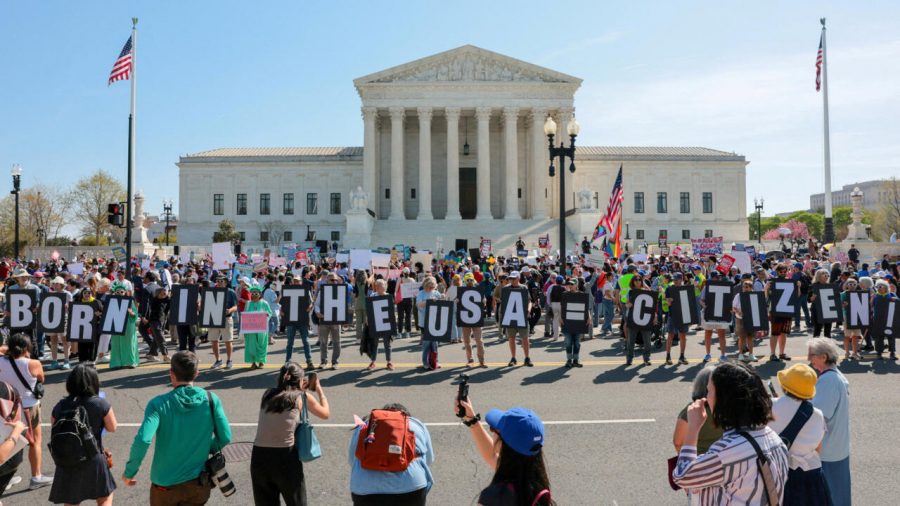
Supreme Court Dismisses Trump’s Bid to Limit Birthright Citizenship
In a decisive ruling, the U.S. Supreme Court has firmly rejected former President Donald Trump’s attempt to limit birthright citizenship, a move that has significant implications for millions of children born in the United States.
Background of the Case
This landmark decision comes in the wake of Trump’s controversial proposal during his presidency, wherein he sought to end the long-standing constitutional principle that grants citizenship to anyone born on U.S. soil, regardless of their parents’ immigration status. The concept of birthright citizenship is rooted in the 14th Amendment of the U.S. Constitution, ratified in 1868, which was initially designed to grant citizenship to formerly enslaved individuals.
The Legal Arguments
During the court proceedings, Trump’s legal team argued that the current interpretation of the 14th Amendment was outdated and needed to be revised to reflect modern immigration dynamics. They contended that allowing automatic citizenship to children of undocumented immigrants undermines the rule of law.
On the other hand, advocates for upholding birthright citizenship argued that it is a fundamental American value, essential for ensuring that all children, regardless of their parents’ immigration status, have equal rights and opportunities. Legal experts noted that any changes to this constitutional provision would require a significant overhaul of existing laws and could potentially lead to widespread legal and social ramifications.
The Supreme Court’s Decision
In a unanimous decision, the Supreme Court ruled against Trump’s proposed restrictions. The justices emphasized the importance of adhering to the Constitution’s original intent and the necessity of protecting the rights of all children born in the U.S. Chief Justice John Roberts stated, “The rule of law must prevail, and we cannot selectively interpret the Constitution to suit political agendas.”
Reactions to the Ruling
The ruling was met with applause from immigrant rights advocates and civil liberties organizations. Maria Rodriguez, a spokesperson for the National Immigration Law Center, stated, “This decision reaffirms our belief that America is a nation built on diversity and inclusion. Birthright citizenship is a bedrock principle that should be protected, not undermined.”
Conversely, some conservative groups expressed disappointment, arguing that the decision fails to address the pressing issues surrounding illegal immigration and citizenship rights. They argued that the ruling sets a precedent that could complicate future immigration reforms.
Implications for Future Policies
The Supreme Court’s ruling could signal a turning point in the ongoing debate over immigration policy in the United States. As the country grapples with rising tensions around immigration and border security, this decision may influence future legislative efforts aimed at reforming the immigration system.
Legal analysts suggest that this ruling will likely embolden advocates for immigrant rights, who may now push for more comprehensive reforms that protect the rights of undocumented families. Moreover, it may serve as a deterrent against similar attempts to challenge birthright citizenship in the future.
Conclusion
As the nation looks ahead, the Supreme Court’s decision underscores the enduring significance of birthright citizenship as a fundamental aspect of American identity. While the debate surrounding immigration is far from over, this ruling reaffirms a commitment to uphold the principles of equality and justice for all individuals born in the United States.