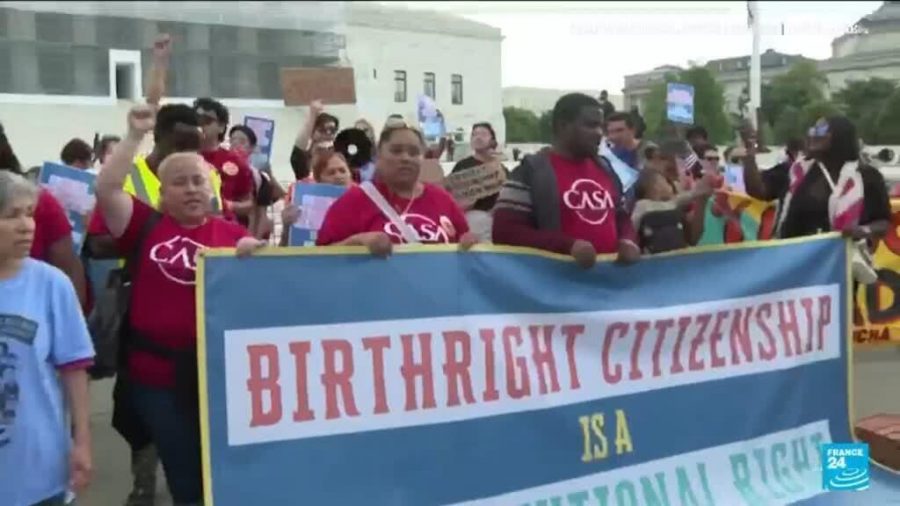
Supreme Court to Rule on Trump’s Challenge to Birthright Citizenship
This week, the United States Supreme Court is set to deliver a series of pivotal rulings that could redefine the boundaries of executive power under President Donald Trump. Among the most anticipated outcomes is a decision regarding Trump’s controversial efforts to roll back birthright citizenship, a long-standing principle enshrined in the 14th Amendment of the Constitution.
Background on Birthright Citizenship
Birthright citizenship, established by the 14th Amendment in 1868, grants citizenship to anyone born on U.S. soil, regardless of their parents’ immigration status. This policy has historically been a cornerstone of American identity, promoting inclusivity and reflecting the nation’s values. However, Trump has repeatedly criticized the policy, claiming it encourages illegal immigration and undermines the integrity of the nation’s immigration system.
The Legal Challenge
The legal battle began when the Trump administration announced plans to limit birthright citizenship rights through executive action. This move was met with immediate backlash from civil rights groups, legal experts, and Democratic lawmakers, who argued that such a drastic change would require congressional approval rather than a unilateral decision by the president.
The case was heard by the Supreme Court in April, where justices examined the implications of altering a constitutional right that has been upheld for over a century. During the oral arguments, attorneys for the Trump administration contended that the current interpretation of birthright citizenship is outdated and that the Constitution does not explicitly guarantee citizenship to children of undocumented immigrants.
Potential Implications of the Ruling
The decision, which is expected to be announced on Tuesday, could have far-reaching consequences for millions of families and individuals across the nation. If the court rules in favor of Trump, it may set a precedent that allows future administrations to alter citizenship laws through executive orders, effectively bypassing the legislative process.
Conversely, a ruling against the Trump administration could reinforce the stability of birthright citizenship, reaffirming the rights of individuals born in the U.S. and potentially narrowing the scope of executive power in immigration matters.
Reactions from Stakeholders
Reactions to the impending ruling are mixed. Advocates for immigration reform and civil rights groups have expressed hope that the Supreme Court will uphold birthright citizenship, viewing it as a vital protection for vulnerable populations. On the other hand, supporters of the Trump administration’s stance argue that the current laws need to be reevaluated in light of modern challenges posed by immigration.
The Broader Context of Immigration Policy
This case is part of a larger narrative concerning immigration policy in the United States, where issues of citizenship, border security, and the status of undocumented immigrants have become increasingly contentious. As the Supreme Court navigates this complex legal terrain, its ruling will not only affect birthright citizenship but could also shape the future of immigration policy for years to come.
Conclusion
As the nation awaits the Supreme Court’s decision, the stakes have never been higher for the future of birthright citizenship and the balance of executive power. The ruling promises to ignite further debate on immigration and citizenship in America, ensuring that the conversation remains at the forefront of national discourse.