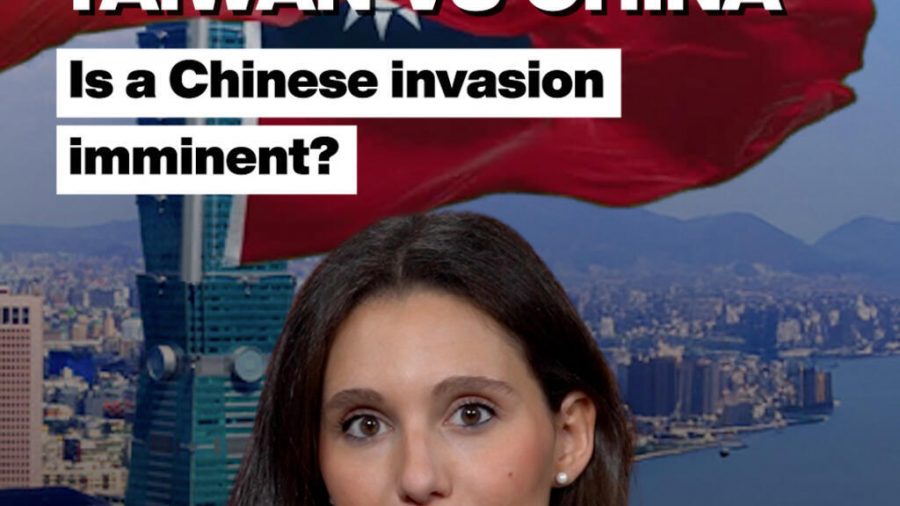
The world is watching with bated breath as US President Donald Trump meets Chinese President Xi Jinping in Beijing for a historic summit. The meeting comes at a time of heightened tensions over Taiwan, a self-governing island that China claims as its own territory. The United States has long been a supporter of Taiwan, providing military support and strong diplomatic ties, but the situation is becoming increasingly volatile.
The History of the Tense Triangle
The complex relationship between Taiwan, China, and the United States has its roots in the Chinese Civil War, which ended in 1949. The defeated Nationalist government, also known as the Kuomintang (KMT), retreated to Taiwan, while the Communist Party of China (CPC) took control of the mainland. Since then, China has considered Taiwan a renegade province that must eventually be reunified with the mainland, by force if necessary.
What’s at Stake?
The situation is further complicated by the fact that Taiwan is a thriving democracy, with a strong economy and a high standard of living. The island has become one of Asia’s greatest success stories, despite never being formally recognized as a sovereign state by most other countries. The United States has a significant stake in the region, with a long history of military and economic cooperation with Taiwan.
The tensions between Taiwan, China, and the United States have significant implications for global trade and technological rivalry. China is a major economic power, and its Belt and Road Initiative (BRI) aims to connect China with other parts of Asia, Europe, and Africa through a network of trade routes. The United States is concerned about China’s growing influence in the region and the potential for China to use its economic power to exert pressure on other countries.
The Possibility of Military Confrontation
The possibility of a military confrontation between Taiwan, China, and the United States is a real concern. China has been increasing its military presence in the region, with a significant buildup of troops and equipment along the Taiwan Strait. The United States has responded by increasing its military presence in the region, with a number of naval and air exercises conducted in recent years.
The situation is made more complex by the fact that Taiwan is not a member of the United Nations, and is not recognized as a sovereign state by most other countries. This has limited Taiwan’s ability to participate in international organizations and to negotiate its own trade agreements. The United States has been a strong supporter of Taiwan, but the situation is becoming increasingly difficult to manage.
Key Players and Interests
- China: China considers Taiwan a renegade province that must be reunified with the mainland. China’s government has stated that it will use force if necessary to achieve this goal.
- Taiwan: Taiwan is a self-governing island that is determined to maintain its independence. The government of Taiwan has stated that it will not be intimidated by China’s military buildup and will continue to seek international recognition as a sovereign state.
- United States: The United States has a long history of military and economic cooperation with Taiwan. The US government has stated that it will continue to support Taiwan, but the situation is becoming increasingly complex.
As the situation continues to unfold, the world will be watching with great interest. The possibility of a military confrontation between Taiwan, China, and the United States is a real concern, and the implications for global trade and technological rivalry are significant. The meeting between President Trump and President Xi is a critical moment in the history of the tense triangle between Taiwan, China, and the United States.