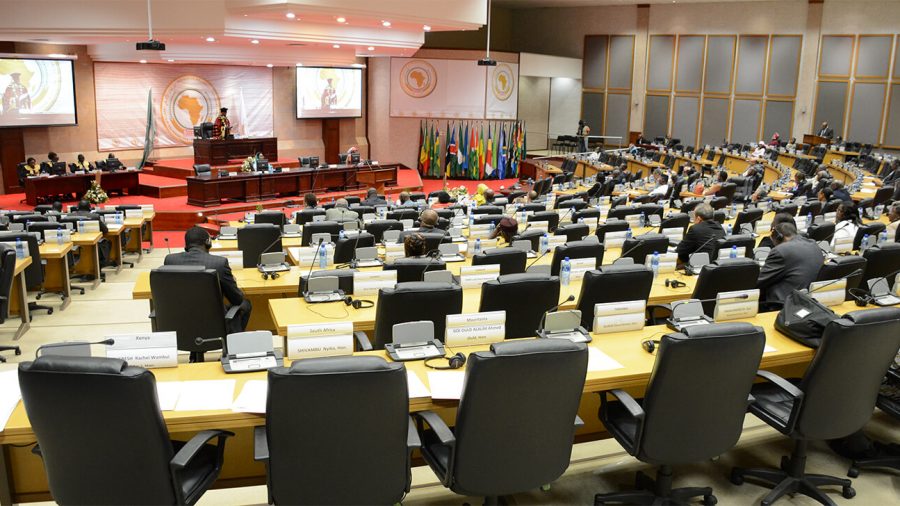
The Pan-African Parliament (PAP), often heralded as the legislative voice of the African continent, has once again come under scrutiny following its recent Extraordinary Session of the Seventh Legislature in Midrand from April 28 to 30, 2026. During this session, Algeria’s Fateh Boutbig was elected president of the PAP’s new Bureau, with the African Union (AU) presenting the occasion as a milestone of reform, institutional renewal, and regional power rotation. Yet, beneath the celebratory rhetoric lies a stark reality: Africa’s powerlessness remains entrenched within a colonial framework that continues to dictate its socio-political and economic dynamics.
The Illusion of Institutional Reform
Liberal commentators often emphasize the PAP’s perceived administrative shortcomings, advocating for reforms in protocols, governance standards, and direct elections. This narrative, however, misdiagnoses the core issue. Africa’s challenge is not merely poor administration—it is the systemic theft and withholding of power. Despite the AU’s efforts to frame the recent PAP session as a step toward continental maturity, many Africans remain skeptical of promises that echo decades of unfulfilled declarations and protocols.
The Malabo Protocol, central to PAP’s envisioned transformation, exemplifies this stagnation. Promising to transition PAP from an advisory body to a legislative authority, it requires 28 ratifications to take effect. As of now, only 15 member states have ratified it, exposing a glaring political reality: African heads of state often champion Pan-African unity in rhetoric while resisting mechanisms that would hold them accountable at a continental level. This hypocrisy leaves the vast majority of African citizens excluded from meaningful decision-making processes, even as leaders claim to act in their name.
The Sahel and the Colonial Legacy
Nowhere is this contradiction more evident than in the Sahel region, where the political dynamics of countries like Burkina Faso, Mali, and Niger have laid bare the inadequacies of the existing Pan-African framework. Burkina Faso, under the leadership of Captain Ibrahim Traoré, exemplifies a forceful rejection of the status quo. Following a 2022 coup, the country remains suspended from AU activities, ostensibly due to a lack of constitutional order. Yet, this suspension raises critical questions about the AU’s priorities and its alignment with colonial-era constructs.
Traoré’s Burkina Faso, along with Mali and Niger, has also exited the Economic Community of West African States (ECOWAS), forming the Alliance of Sahel States in defiance of regional frameworks that they see as perpetuating colonial subjugation. These nations argue that true Pan-Africanism cannot coexist with inherited colonial boundaries, creditor-imposed austerity, and regional bureaucracies that often protect Western-aligned regimes. The PAP’s inability to address these issues head-on illustrates the limits of its authority and the urgent need for a reimagined approach to African sovereignty.
Reform or Resistance?
The ongoing developments in the Sahel region challenge the PAP to confront an existential question: Is Pan-Africanism merely a veneer for maintaining the colonial state apparatus, or can it become a genuine vehicle for African sovereignty? At its core, this question demands a reevaluation of the continent’s relationship with its land, resources, and systems of governance. It is a question that liberal commentators often sidestep, choosing instead to frame events like the Sahel coups as instances of political instability and democratic backsliding.
Such narratives serve to uphold the status quo, shielding the intricate web of international interests—ranging from Western governments to global financial institutions—that continue to dictate Africa’s policy options. These external forces, along with the continent’s own elite, have long ensured that African elections function as little more than democratic facades. As long as these dynamics persist, the PAP’s potential to act as a transformative institution will remain unrealized.
A Call for Genuine Liberation
The real challenge for the PAP, and indeed for the entire African continent, lies in breaking free from the colonial architecture that still defines its political and economic systems. This requires more than well-meaning protocols and reforms; it demands a radical rethinking of African unity, one that prioritizes sovereignty over submission and action over rhetoric.
As the PAP’s new Bureau begins its work, it faces a critical juncture. Will it embrace a version of Pan-Africanism that perpetuates the status quo, or will it champion a vision of liberation that addresses the continent’s historical and ongoing injustices? The answer to this question will determine whether the PAP remains a weak institution shackled by its colonial origins or becomes a genuine force for African empowerment.