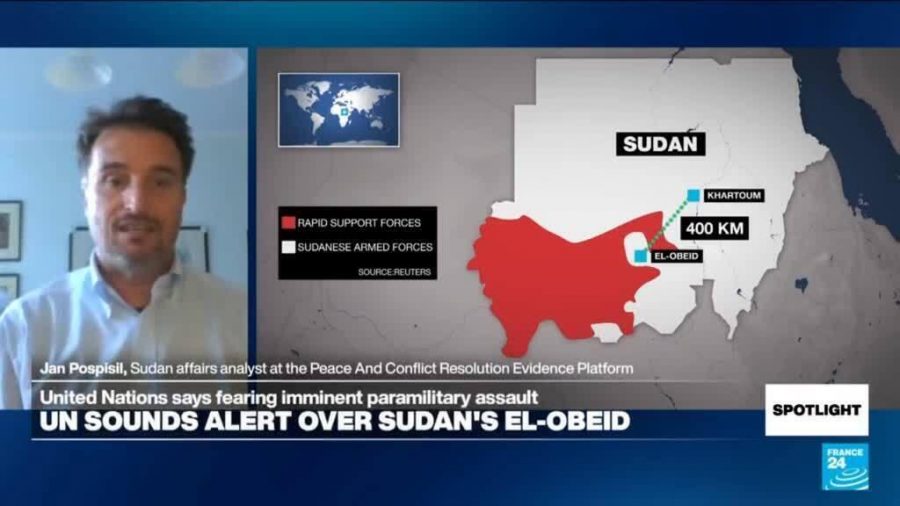
Understanding the Dynamics of Sudan’s Civil War
As Sudan’s civil war intensifies, the conflict continues to draw attention from international players who are both influencing and observing the situation. In an enlightening discussion with Jan Pospisil, a Sudan Affairs Analyst at the Peace and Conflict Resolution Evidence Platform, it becomes clear that the ongoing siege has created a complex web of allegiances and interventions.
The Current State of the Siege
Pospisil notes that the siege in Sudan has persisted for almost a year, with the Rapid Support Forces (RSF) remaining resolutely focused on capturing strategic locations, particularly el-Obeid. This commitment underscores the RSF’s tactical objectives and the broader implications of their military strategy.
Is It a Proxy War?
While Pospisil emphasizes that Sudan’s civil war is not a proxy war in the traditional sense, he acknowledges a significant caveat: “Without international support, the war would not go on like this.” This statement highlights the critical role that foreign powers play in sustaining the conflict, even if they are not directly involved in combat.
The Influence of International Actors
Various nations, including the United Arab Emirates, the United States, and Saudi Arabia, have been implicated in supplying arms and resources to the warring factions. Despite their involvement, Pospisil argues that none of these international actors possess the necessary leverage to bring the conflicting parties to a ceasefire, let alone facilitate a comprehensive peace agreement.
Challenges in Achieving Peace
The lack of effective diplomacy and intervention is troubling. The international community has failed to create a unified approach that could lead to meaningful negotiations. Pospisil’s analysis suggests that the fragmented nature of international involvement contributes to the ongoing violence.
The Future of Sudan’s Civil War
Looking ahead, the prospects for peace in Sudan remain bleak. The RSF’s ambition to control key territories indicates that the conflict may continue unabated unless there is a significant shift in the international response. Without a concerted effort to engage with both the Sudanese government and the RSF, the cycle of violence is likely to persist.
The Human Cost of War
As the fighting drags on, the humanitarian situation in Sudan grows more dire. Civilians bear the brunt of the conflict, facing food shortages, displacement, and violence. Efforts to provide aid are hampered by the ongoing hostilities, complicating the landscape for humanitarian organizations.
Conclusion: A Call for Action
In light of these challenges, it is imperative that the international community reassesses its strategy regarding Sudan. A more coordinated effort is required to leverage diplomatic channels and foster dialogue between the warring parties. Only through a unified approach can there be hope for a resolution to this devastating conflict.