Understanding the Zebra Camouflage Strategy
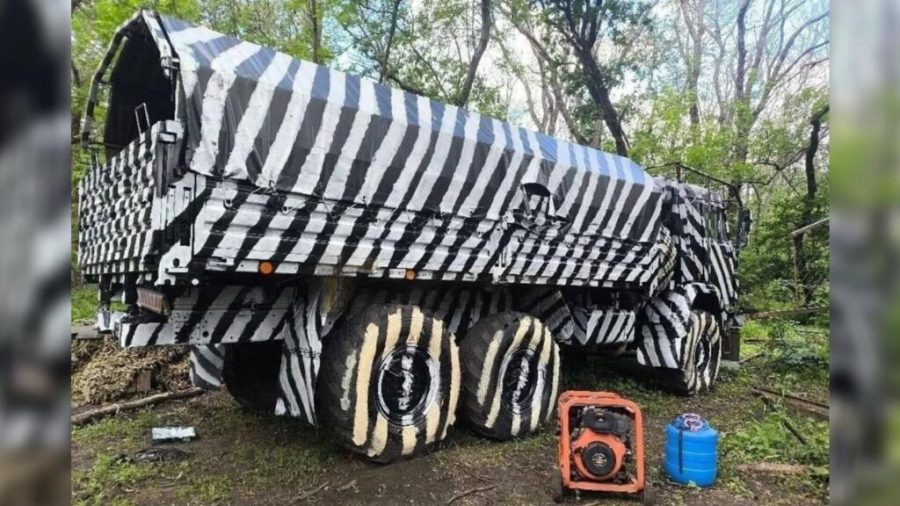
In the ongoing conflict in Ukraine, Russian military forces have introduced a novel approach to camouflage that has captured the attention of military analysts and enthusiasts alike. Images shared by military bloggers reveal that Russian trucks are now adorned with distinctive black-and-white striped patterns resembling a zebra’s stripes. This innovative camouflage technique aims to outsmart the increasingly sophisticated AI recognition systems deployed by Ukrainian drones.
The Evolution of Camouflage in Warfare
Camouflage has been a vital component of military strategy for centuries. Traditionally, armies have relied on earthy tones and patterns to blend into natural surroundings. However, as warfare technology has advanced, particularly with the advent of drones and AI surveillance systems, the need for new forms of camouflage has emerged. The introduction of zebra stripes on Russian trucks represents a significant shift in how forces are adapting to these technological changes.
Why Zebra Stripes?
The choice of a black-and-white striped pattern may seem unconventional at first glance. However, this design is specifically aimed at deceiving visual recognition algorithms. Drones equipped with AI systems are trained to identify various military assets based on their shapes and colors. The zebra stripes disrupt the visual outline of the trucks, making it more challenging for drones to accurately classify and target them.
Practical Applications on the Battlefield
The use of zebra camouflage reflects a broader trend of tactical adaptation in modern warfare. As both sides in the conflict continue to leverage technology, the battlefield has transformed into a high-stakes chess game where each move is countered by the other. The implementation of zebra stripes is not merely a cosmetic change; it signifies a strategic effort to enhance the survivability of military assets in an environment where aerial reconnaissance plays a pivotal role.
Response from Ukrainian Forces
In response to this new tactic, Ukrainian forces are likely to intensify their efforts in developing countermeasures against such camouflage techniques. The battle for air superiority and intelligence dominance remains fierce, with both sides seeking any advantage they can gain. Ukrainian military analysts are already examining the effectiveness of zebra camouflage and exploring ways to improve their AI recognition systems to counteract such innovations.
Implications for Future Conflicts
The adoption of zebra camouflage by Russian forces raises important questions about the future of military operations in the age of technology. As AI continues to shape the landscape of warfare, the emphasis on innovative camouflage solutions will likely increase across the globe. Other militaries may take note of this tactic and explore similar strategies to protect their assets from aerial threats.
Conclusion
The introduction of zebra camouflage on Russian trucks in Ukraine is more than just a tactical maneuver; it exemplifies the evolving nature of warfare in the digital age. As both sides continue to innovate and adapt, the conflict serves as a case study for how military strategy is shifting in response to advancements in technology.
- Innovation in camouflage: A response to AI surveillance.
- Strategic adaptation: The ongoing evolution of military tactics.
- International implications: A potential shift in global military strategies.