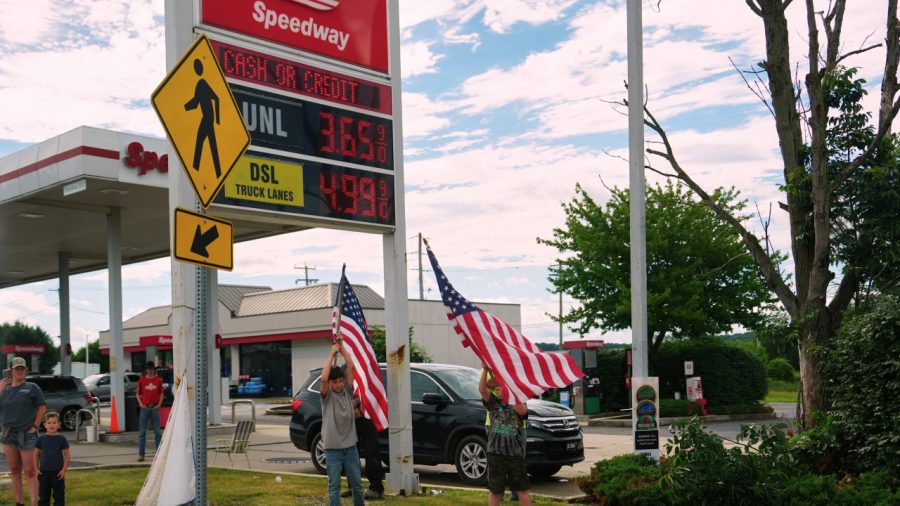
Trump Critiques Biden Amid Rising Gas Prices
In a recent turn of events, former President Donald Trump has expressed his frustration over soaring gas prices, redirecting some of the blame towards current President Joe Biden. This comes as the nation grapples with economic challenges, including inflation and rising energy costs. Trump’s criticisms echo sentiments previously expressed by Biden, as both leaders have found themselves at odds with the oil industry.
The Political Landscape of Fuel Prices
Fuel prices have become a contentious issue in American politics, with both parties attempting to navigate the complexities of the oil supply chain. Trump’s latest remarks suggest a strategy to leverage dissatisfaction among voters regarding economic conditions, particularly the burden of high gas prices on middle-class families.
Trump’s Strategic Shift
During a rally in Michigan, Trump pointedly criticized the Biden administration’s energy policies, arguing that they have exacerbated the situation. “Under my administration, gas prices were lower, and we were energy independent,” Trump proclaimed, harkening back to his tenure when he often touted the nation’s energy achievements.
This narrative serves not only to bolster his political standing but also to draw attention to the broader implications of energy policy on everyday Americans. High gas prices affect not just the cost of fuel but have a ripple effect on the prices of goods and services, further straining family budgets.
Oil Executives Respond
In response to Trump’s comments, some executives from the oil industry have expressed their concerns privately. They argue that the President’s criticism overlooks the complexities of the fuel supply chain, which is often described as a slow-moving machine. They emphasize that factors such as global demand fluctuations, supply chain disruptions, and regulatory policies play significant roles in determining fuel prices.
- Global demand for oil has surged post-pandemic, creating upward pressure on prices.
- Supply chain issues, exacerbated by geopolitical tensions, have contributed to market volatility.
- Regulatory policies and environmental regulations have also impacted oil production capabilities.
The Role of Geopolitics
The complexities of the global oil market cannot be understated. Recent geopolitical events, including tensions between major oil-producing nations, have influenced supply and demand dynamics. Consequently, oil executives argue that while political leaders may call for immediate solutions, the reality of the market is far more intricate.
As the Biden administration navigates these challenges, it faces criticism from both sides of the political spectrum. While Trump capitalizes on the frustrations of American consumers, Democrats advocate for long-term solutions that address sustainability and energy independence.
The Future of Energy Policy
The discourse surrounding energy policy is likely to intensify as the 2024 presidential election approaches. Both parties will continue to leverage the narrative of gas prices to rally support among voters. For Trump, the strategy involves positioning himself as the champion of lower energy costs, while Biden aims to highlight efforts towards renewable energy and reducing dependency on fossil fuels.
As consumers feel the pinch at the pump, the political ramifications of rising gas prices will undoubtedly play a significant role in shaping the upcoming electoral landscape.