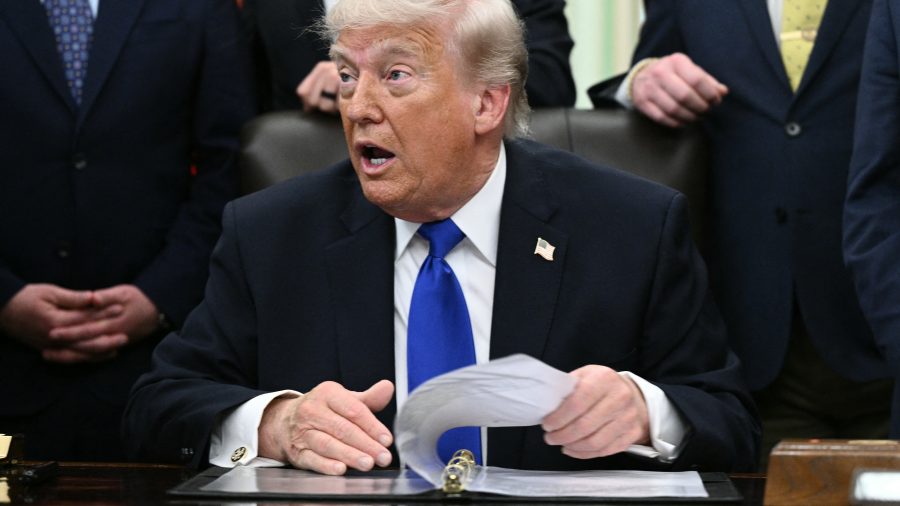
Trump’s Bold Move: A 25% Tariff on European Autos
In a surprising announcement, former President Donald Trump declared his intention to raise tariffs on European Union (EU) automobiles to a staggering 25%. This decision comes in the wake of the Supreme Court striking down a previous set of “reciprocal” tariffs earlier this year. The implications of this move could have significant repercussions for U.S.-EU trade relations.
The Background of Tariff Policies
Trump’s approach to tariffs has been a hallmark of his economic policy, characterized by a protectionist stance aimed at safeguarding American industries. However, after the Supreme Court’s recent ruling, which deemed his previous tariffs unconstitutional, the former President has shifted gears, now targeting the EU’s automotive sector.
Impact of the Supreme Court Ruling
The Supreme Court’s decision earlier this year was a major setback for Trump’s trade agenda. The ruling effectively nullified his “reciprocal” tariffs, which were designed to impose duties on goods from countries that charged high tariffs on American products. This legal blow has raised questions about the future of U.S. trade policies, particularly as they relate to Europe.
Europe’s Response
In light of Trump’s announcement, European officials have expressed concerns that the proposed tariffs could jeopardize the existing trade deal between Washington and Brussels. The EU has historically been a strong trading partner for the United States, and any disruption in this relationship could have far-reaching consequences for both economies.
Economic Implications
The automotive industry is a significant component of the EU economy, contributing billions to the region’s GDP and supporting millions of jobs. A 25% tariff could lead to increased prices for consumers in the U.S. and reduced sales for European automakers. This potential trade war could escalate tensions between the U.S. and Europe, with both sides feeling the economic pinch.
Trade Deal Uncertainty
As the threat of tariffs looms, there is a growing uncertainty about the future of the transatlantic trade deal. Negotiations have been ongoing, with both sides striving to create a mutually beneficial agreement. However, Trump’s recent declaration has cast a shadow over these discussions, leaving many to wonder if a resolution is possible.
What Lies Ahead?
As the situation develops, industry experts and analysts will be closely monitoring the potential fallout from Trump’s tariff proposal. The consequences could extend beyond the automotive sector, affecting various industries and consumer prices across the board. With trade relations hanging in the balance, both the U.S. and EU must navigate these turbulent waters carefully.
Conclusion
Trump’s announcement to impose a 25% tariff on EU automobiles marks a significant escalation in trade tensions between the U.S. and Europe. As both sides grapple with the implications of this decision, the future of their trade relationship remains uncertain, with potential ramifications for the global economy.