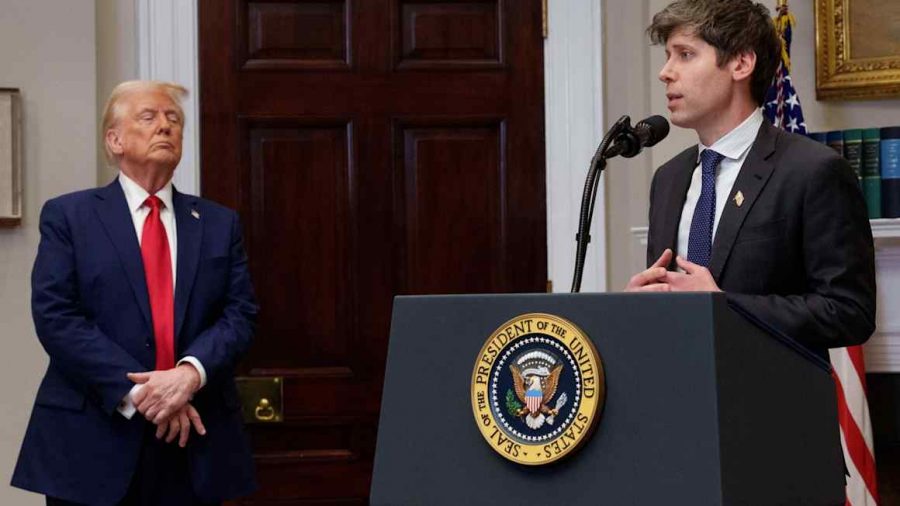
Trump Proposes U.S. Equity Stakes in AI Companies Ahead of Midterms
In a bold move aimed at addressing growing concerns over artificial intelligence (AI), former President Donald Trump suggested that the United States government could take equity stakes in AI companies. This proposal, shared during a recent public appearance, comes as technology continues to dominate headlines and shape voter sentiment ahead of the November midterm elections.
A Strategic Partnership to Alleviate Concerns
Trump emphasized that a government partnership with AI companies could help alleviate voter concerns about the rapid advancement of AI technologies. “We need to ensure that Americans feel secure about the technologies that are shaping our future,” Trump stated, advocating for a model where the government could have a financial stake in these companies. This, he argues, would ensure that developments in AI align with the interests of the American public.
The Growing Debate Over AI Regulation
The debate surrounding AI is intensifying, with many voters expressing anxiety about how these technologies could impact job markets, privacy, and security. By proposing equity stakes, Trump aims to position himself as a proactive leader who is willing to tackle these complex issues head-on. He believes that having a financial interest in these companies could lead to more responsible development practices.
Voter Concerns and Political Strategy
As the midterm elections approach, candidates from both parties are keenly aware of the shifting public opinion regarding technology. Many voters are increasingly concerned about the implications of AI, with polls indicating that a significant percentage of Americans are worried about job loss and ethical considerations in AI deployment. Trump’s proposal could resonate with voters who seek reassurance that their government is taking action to manage these advancements.
Potential Economic Impact
The proposal also raises questions about the economic implications of government investment in private companies. Critics argue that such a move could lead to government overreach and could distort the market. However, supporters suggest that it could foster innovation and ensure that American companies remain competitive in the global tech landscape.
International Perspectives on AI Regulation
Globally, countries are grappling with how to regulate AI, with some taking more aggressive stances than others. The European Union, for instance, is actively working on comprehensive regulations that could serve as a model for other nations. Trump’s suggestion of equity stakes could signal a different approach, one that prioritizes collaboration between the government and tech sectors.
Looking Ahead: The Midterm Elections
As the midterm elections draw nearer, Trump’s proposal is likely to be a focal point in discussions about technology and governance. Candidates across the political spectrum will need to address the concerns of their constituents regarding AI, and Trump’s strategy may compel them to articulate their own positions on this rapidly evolving issue.
Conclusion
With the intersection of technology and politics becoming increasingly pronounced, Trump’s proposal for equity stakes in AI companies could redefine how voters perceive the role of government in emerging technologies. As discussions unfold, the outcome could have lasting implications for both the tech industry and the political landscape in the United States.