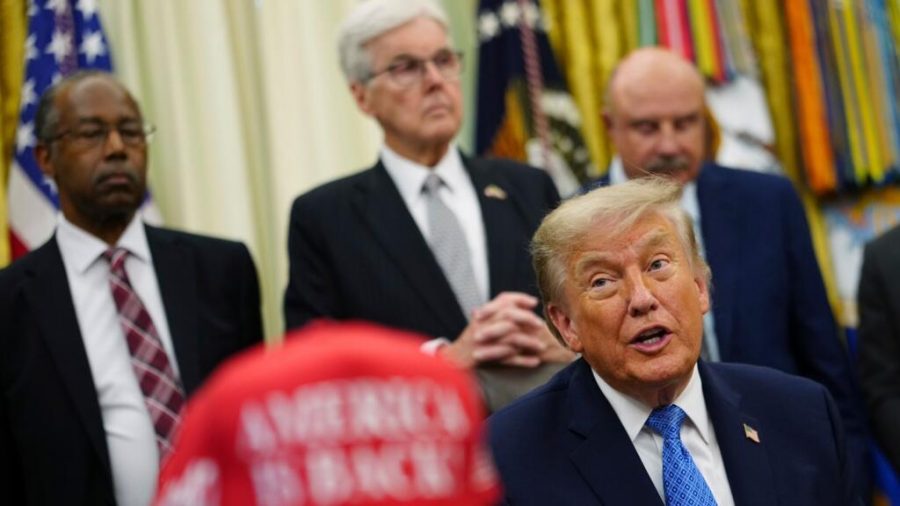
Trump’s Tariff Threat: A Bold Move Against Europe
In a striking escalation of trade tensions, US President Donald Trump issued a stern warning on Friday, threatening to impose a staggering 100% tariff on European countries that implement a digital services tax. This ultimatum highlights the ongoing rift between the United States and Europe over taxation and trade policies, raising concerns about potential economic repercussions.
The Digital Services Tax Debate
The digital services tax has become a contentious issue, particularly as countries in Europe seek to ensure that tech giants pay their fair share of taxes. This tax primarily targets companies like Google, Amazon, and Facebook, which generate substantial revenues from their operations in Europe but pay relatively little tax due to existing loopholes and favorable regulations.
As European nations, including France and the UK, move forward with plans to implement such taxes, the Trump administration has labeled these initiatives as discriminatory against American companies. The president’s remarks reflect a broader frustration with what he perceives as unfair trade practices that disadvantage US businesses.
Implications of a 100% Tariff
The prospect of a 100% tariff on European goods could have sweeping implications for transatlantic trade. Such a measure would effectively double the tariffs on products imported from Europe, significantly impacting a range of industries and leading to increased prices for American consumers.
- Consumer Costs: Experts warn that consumers could face higher prices on a variety of goods, from luxury items to everyday products.
- Supply Chain Disruptions: Many American companies rely on European suppliers, and tariffs could disrupt established supply chains.
- Retaliation Risks: The EU may respond with its own tariffs, escalating the trade war and affecting both economies.
Trump’s threat to cancel existing trade agreements if European countries proceed with their digital services tax is particularly alarming. The US has several trade agreements with European nations, which have been crafted over decades to foster economic cooperation and mutual benefit. The cancellation of these agreements could lead to increased economic isolation for the US and complicate diplomatic relations.
A History of Trade Tensions
This latest episode is part of a broader narrative of trade tensions that have characterized Trump’s presidency. His administration has consistently challenged what it sees as imbalanced trade relationships, particularly with major economic players like China and the European Union. The imposition of tariffs has been a central tactic in this strategy.
During his tenure, Trump has enacted significant tariffs on various goods, claiming they protect American jobs and industries. However, critics argue that these tariffs often hurt American consumers and lead to retaliatory measures that can destabilize international trade.
The International Response
Responses from European leaders to Trump’s latest threat have been mixed. Some have expressed concern over the potential for a trade war, while others have stood firm in their commitment to implement the digital services tax.
French Finance Minister Bruno Le Maire stated, “We will not let ourselves be intimidated by threats. The digital services tax is about fairness and ensuring that large tech companies contribute to our economies.” This sentiment reflects a growing resolve among European nations to pursue their fiscal policies despite pressure from the US.
Looking Ahead
As the dialogue continues, the global economic landscape remains precarious. Businesses and consumers alike are watching closely, as the potential for increased tariffs could reshape the nature of transatlantic trade. With both sides entrenched in their positions, finding a resolution that satisfies all parties may prove challenging.
In conclusion, Trump’s bold threat to impose 100% tariffs on European countries implementing a digital services tax underscores the fragility of international trade relations. As both sides navigate this complex issue, the stakes have never been higher for businesses, consumers, and governments.