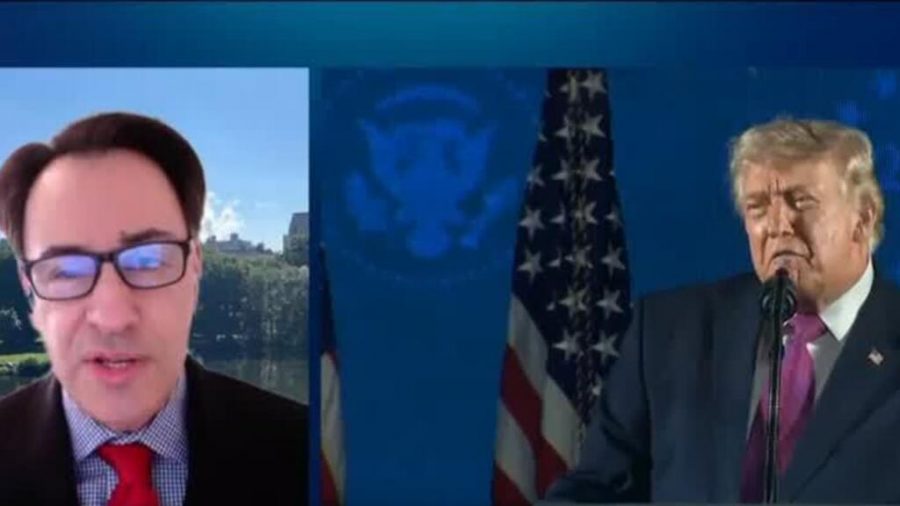
Trump’s Mount Rushmore Speech: A Divisive Celebration of American Independence
On July 3, 2020, President Donald Trump marked the 250th anniversary of American independence with a speech delivered against the majestic backdrop of Mount Rushmore. What began as a celebration of American exceptionalism quickly morphed into a politically charged address, replete with warnings of a looming threat that many observers interpreted as a call to arms against perceived enemies of the state.
Soaring Rhetoric Meets Dark Political Undertones
As fireworks lit up the night sky above the iconic granite faces of former presidents, Trump’s rhetoric soared, extolling the virtues of freedom and democracy. Yet, as Ian Reifowitz, a distinguished professor of history at SUNY-Empire State University, noted, the speech took a darker turn as Trump delved into themes of division and fear. “He is making it clear who’s in and who’s out,” Reifowitz observed, suggesting that the president has weaponized the celebration for his own political gain.
Communism: A Ghost from the Past
In an alarming segment of his speech, Trump invoked the specter of communism, a term that evokes memories of one of America’s most tumultuous periods during the Cold War. He painted a picture of an America under siege, suggesting that a radical leftist agenda was threatening to dismantle the very foundations of the nation. This framing, according to Reifowitz, was not just an attempt to rally his base, but also a strategic move to consolidate his power at a time when the country is grappling with significant social and political upheaval.
Political Celebrations and Their Consequences
Trump’s use of national celebrations as a political platform is not unprecedented, but his approach has drawn sharp criticism. Many argue that such politicization undermines the spirit of unity that independence celebrations are meant to inspire. The president’s rhetoric has been characterized by a stark contrast between ‘us’ and ‘them,’ which Reifowitz argues could further entrench divisions in a nation already fraught with conflict.
Responses to Trump’s Address
- Supporters: Many of Trump’s supporters welcomed the speech as a rallying cry for American patriotism, resonating with their views on national pride and identity.
- Critics: Conversely, critics condemned the speech as a dangerous incitement of fear, accusing Trump of exploiting a moment of national significance to advance his own agenda.
- Historians: Historians and political analysts echoed Reifowitz’s sentiments, warning that the invocation of communism and division is reminiscent of tactics used during the Red Scare, which often led to widespread paranoia and social unrest.
The Broader Implications
As America stands at a crossroads, grappling with issues of racial justice, economic inequality, and a global pandemic, Trump’s divisive speech at Mount Rushmore raises critical questions about the future of American democracy. In a time when unity is desperately needed, the president’s words serve as a stark reminder of the deep political fissures that threaten to fracture the nation even further.
With upcoming elections on the horizon, the implications of Trump’s rhetoric could extend far beyond a single speech. By framing the national narrative in terms of existential threats, he may seek to galvanize his base while alienating those who do not share his vision for America.