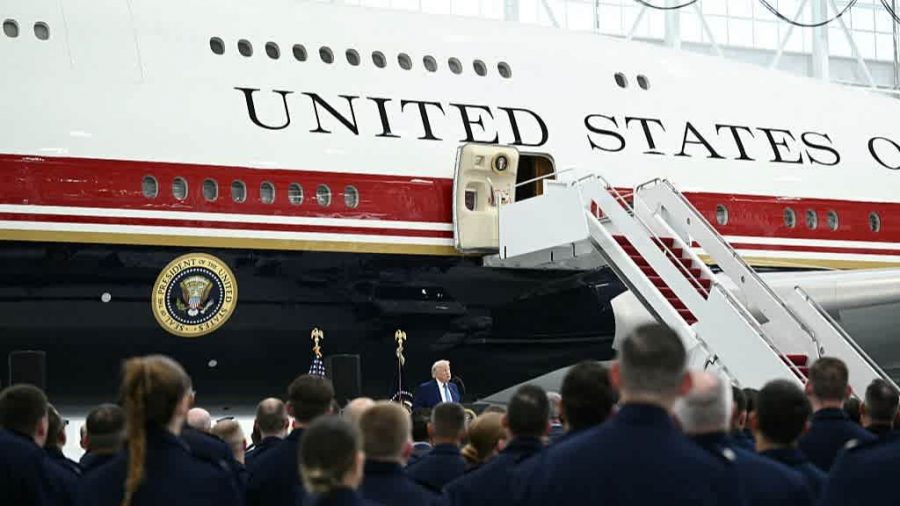
Trump Accepts Qatar Jet as New Air Force One Amid Ethical Questions
In a surprising turn of events, former President Donald Trump has accepted a lavish $400 million private jet from Qatar, which is being dubbed as a new Air Force One. This high-profile acceptance has sparked a significant debate about the ethical implications of such a gift, raising concerns about potential conflicts between Trump’s personal interests and his responsibilities as a former president.
The Gift That Could Complicate Trump’s Legacy
The Boeing 747, officially designated as a VIP transport aircraft, has been customized to meet the luxurious requirements that Trump is known to prefer. While supporters claim the jet could serve as a valuable asset for future engagements, critics argue that accepting such a substantial gift could intertwine Trump’s personal and political interests in troubling ways.
Concerns Over Ethics and Conflicts of Interest
The acceptance of the jet from a foreign nation has not gone unnoticed by ethics watchdogs and political analysts. Many are raising alarms over the implications of accepting such a gift, especially from a country like Qatar, which has faced scrutiny for its human rights record and geopolitical strategies.
- Potential Conflicts: Critics assert that the gift could create a perception of favoritism or influence, suggesting that Trump may be inclined to support Qatari interests in future political endeavors.
- Legal Implications: There are questions about the legality of accepting such a gift under U.S. law, which prohibits officials from accepting gifts from foreign entities that could be seen as seeking to influence policy.
- Public Perception: The optics of accepting a $400 million jet may not sit well with the American public, especially in light of ongoing discussions about wealth inequality and the responsibilities of public figures.
Support and Criticism from Political Circles
Trump’s allies have come to his defense, arguing that the jet is a practical tool that could aid in his continued public presence and political activities. They emphasize that such high-value gifts are not uncommon among former leaders globally and assert that Trump should have the same privileges.
Conversely, opponents of Trump have seized upon this moment to reiterate their concerns regarding his business dealings and the potential for corruption. They argue that this gift should be seen not just as a luxury but as a symbol of the blurred lines between personal gain and public service.
The Broader Implications for U.S. Politics
This incident is not just about Trump; it raises broader questions regarding the intersection of wealth, politics, and ethics in the United States. As former officials navigate their post-presidency lives, the precedence set by accepting such lavish gifts could influence how future leaders engage with foreign nations and the ethical standards expected of them.
Conclusion: A Controversial Gift or a Strategic Asset?
As the debate over Trump’s acceptance of the Qatar jet continues, both supporters and detractors are likely to intensify their arguments. Whether this move will enhance Trump’s influence or complicate his legacy remains to be seen. For now, the acceptance of such a significant gift stands as a testament to the intricate relationship between power, wealth, and responsibility in American politics.