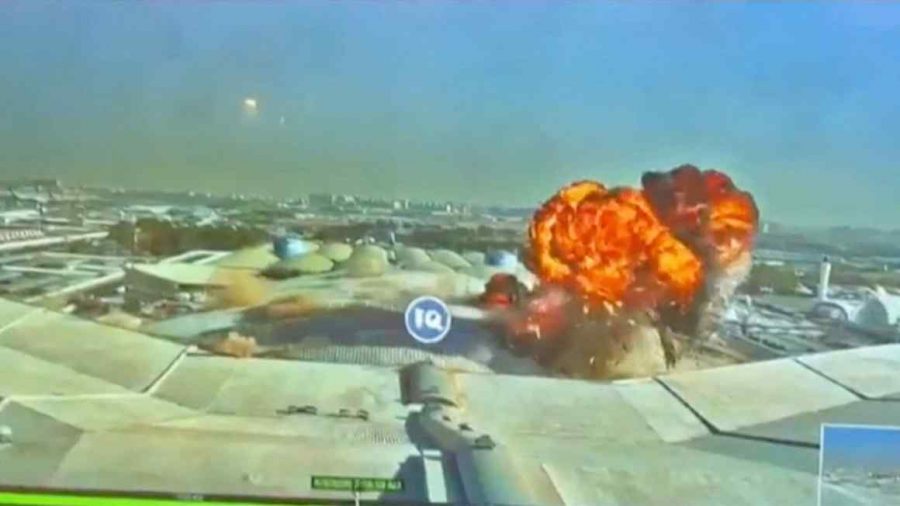
US and Iran Exchange Strikes: A New Threat to the Fragile Ceasefire
The recent exchange of strikes between US and Iranian forces has escalated tensions in the Middle East, raising alarms about the stability of an already fragile ceasefire. As American forces intercepted drones launched over the Strait of Hormuz, attacks in Kuwait and Bahrain have underscored the precarious nature of regional security.
The Background of Tension
The ongoing conflict between the United States and Iran has deep roots, stemming from long-standing geopolitical rivalries and conflicting interests in the region. The recent incidents mark a significant escalation, showcasing the potential for broader military confrontations that could destabilize the entire area.
Details of the Strikes
Reports indicate that several drone strikes were intercepted by US forces as they attempted to breach the airspace over the Strait of Hormuz. These drones, believed to have been launched from Iranian territory, targeted both Kuwaiti and Bahraini military installations, prompting immediate retaliatory measures from US forces.
- Location of Strikes: The strikes were particularly focused on bases that house American troops, raising concerns about the safety of personnel in the region.
- Response from US Forces: In a show of strength, US military assets were deployed to intercept the drones, successfully averting what could have been a catastrophic incident.
- Iran’s Position: Iranian officials have not commented directly on the intercepted drones but have repeatedly warned against US military presence in the Gulf.
Impact on Regional Security
The escalation of hostilities between the US and Iran poses a significant threat to regional security. With both nations showcasing their military capabilities, neighboring countries are left feeling vulnerable amidst the uncertainty. The situation has prompted discussions among Gulf Cooperation Council (GCC) members about the necessity of strengthening their defense strategies.
International Reactions
The international community has reacted with concern as the prospect of military conflict looms. European leaders have called for de-escalation, urging both sides to return to diplomatic negotiations to prevent further violence.
“This is a critical moment for all parties involved,” said a senior diplomat from a European nation. “Continued military strikes will only lead to greater instability and suffering for the people of the region.”
Looking Ahead
As tensions continue to rise, the potential for further military engagement remains high. Analysts warn that without meaningful dialogue and a commitment to peace, the situation could spiral out of control.
In the coming weeks, it will be crucial for international stakeholders to engage in discussions aimed at averting further conflict. The world watches closely, hoping for a return to diplomacy over military action, as the consequences of escalation could have dire implications not just for the Middle East, but for global security as a whole.