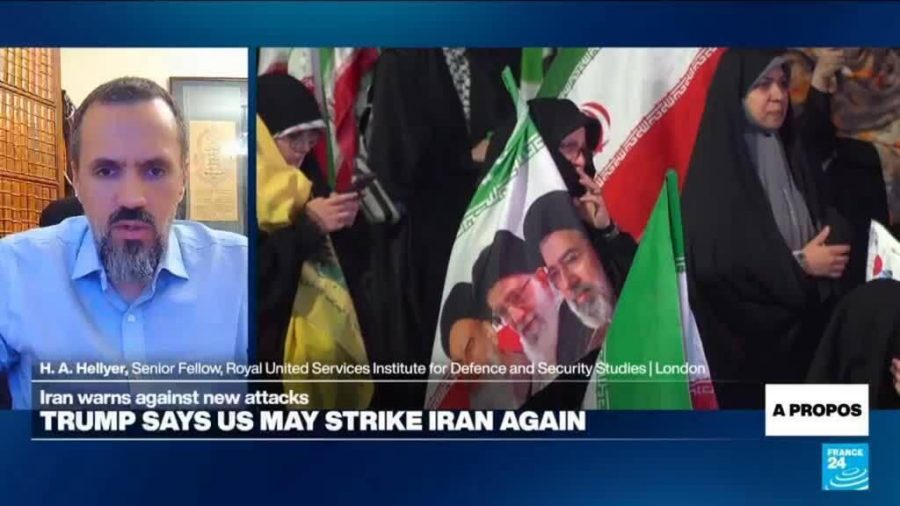
Analyst Warns of Looming Crisis in the Gulf
A leading analyst has warned of a looming crisis in the Gulf, citing a huge mismatch between the expectations of Iran, the US, and Gulf Arab states. Speaking with FRANCE 24’s Sharon Gaffney, H. A. Hellyer, Senior Associate Fellow at the Royal United Services Institute for Defence and Security Studies in London, highlighted the deep divisions between the key players in the region.
Expectations and Realities
According to Hellyer, there is a very huge mismatch not just between the expectations of the Iranians and the Americans, but also among Gulf Arab states which will have to live with whatever mess is left after this. This mismatch, he argues, stems from fundamentally different understandings of the region’s dynamics and the role of external actors.
The US, under the current administration, has adopted a maximalist approach towards Iran, seeking to exert significant pressure on the regime through economic sanctions and diplomatic isolation. In contrast, Iran has pushed back against these efforts, seeking to maintain its regional influence and protect its economic interests.
Gulf Arab States Caught in the Middle
Gulf Arab states, which have traditionally maintained close ties with the US, find themselves caught in the middle of this escalating crisis. These states will have to live with the consequences of any conflict or agreement reached between the US and Iran, and are therefore keenly aware of the need for a peaceful resolution.
- Economic interests: Gulf Arab states have significant economic interests in the region, including major oil and gas reserves, which could be impacted by any conflict.
- Security concerns: The region is also home to several key security flashpoints, including the Strait of Hormuz, which is a critical waterway for international trade.
- Regional influence: Gulf Arab states are seeking to maintain their regional influence, and are wary of being drawn into a conflict that could undermine their positions.
A Way Forward
Despite the challenges, there are still opportunities for a peaceful resolution to the crisis. Diplomacy and dialogue will be key to finding a way forward, and all parties must be willing to engage in constructive negotiations. The international community also has a critical role to play in supporting these efforts and promoting a stable and secure region.