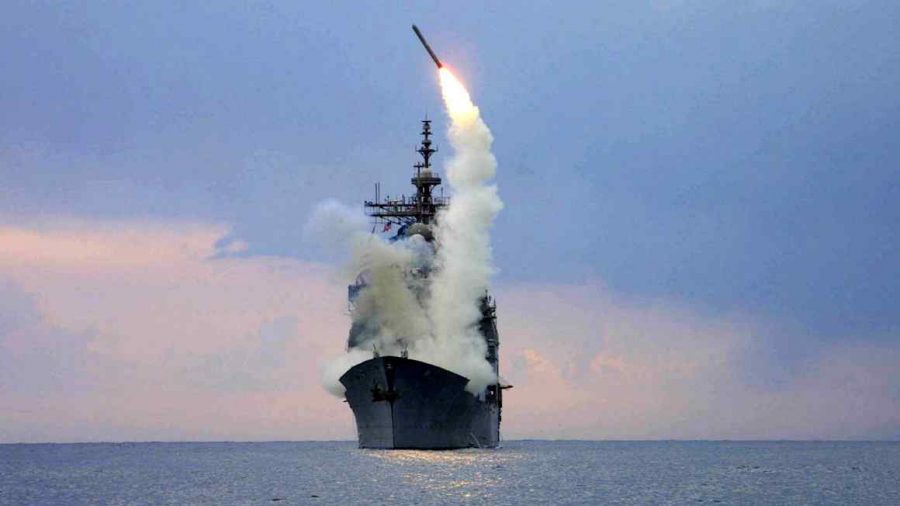
The United States has cautioned Japan about potential significant delays in the delivery of Tomahawk cruise missiles, citing the need to replenish its depleted stockpiles due to ongoing military operations in the Middle East. According to sources familiar with the matter, the Pentagon’s efforts to address a critical shortfall in weapons could push back delivery timelines by up to two years, potentially impacting Japan’s defense preparedness.
Tomahawk Delivery Timeline in Jeopardy
The delays stem from the U.S. military’s heightened demand for advanced weaponry as it seeks to counter escalating tensions in the Middle East, particularly in light of a military campaign involving Iran. The conflict has placed an extraordinary strain on U.S. missile inventories, forcing the Department of Defense to prioritize its own immediate operational needs over international commitments.
Japan, which had struck a deal with the U.S. to acquire Tomahawk cruise missiles as part of its defense modernization efforts, now faces an uncertain timeline for the weapons’ arrival. The missiles were initially expected to be delivered by 2025, but officials have hinted that shipments could be delayed until 2027, raising concerns about the impact on Japan’s national security strategy.
Repercussions for Japan’s Defense Strategy
The delay comes at a critical juncture for Japan, which has been bolstering its defense capabilities in response to a shifting security landscape in the Indo-Pacific region. The acquisition of Tomahawk missiles was seen as a key element of the nation’s strategy to deter regional threats, particularly from North Korea and China.
Japanese defense officials have expressed apprehension about the potential delay, emphasizing the importance of the missiles for maintaining a credible deterrent. “The Tomahawk acquisition is a cornerstone of our defense policy,” a senior official stated, adding that the delay could necessitate a reevaluation of Japan’s short-term defense planning.
Mounting Challenges for the Pentagon
The Pentagon, meanwhile, faces mounting pressure to address its own stockpile deficiencies. The U.S. military’s extensive use of precision-guided munitions in the Middle East has reportedly left inventories at critically low levels, prompting an urgent push to ramp up production. However, defense industry experts warn that scaling up missile manufacturing is a complex and time-consuming process, further complicating efforts to meet both domestic and international demands.
In addition to Japan, other U.S. allies and partners may also experience delays in weapon deliveries as the Pentagon grapples with the dual challenge of supporting ongoing military operations and fulfilling existing export agreements. This situation underscores the broader strain on global arms supply chains, which have been disrupted by geopolitical tensions and pandemic-related production slowdowns.
What Lies Ahead
As the U.S. juggles its military commitments, the ripple effects of the Iran conflict are being felt across the globe. For Japan, the delay in Tomahawk deliveries highlights the complex interdependencies of international defense agreements and the challenges of ensuring national security in an unpredictable world.
While the U.S. has yet to provide a definitive timeline for resolving the delays, both nations are reportedly in close communication to mitigate the impact on Japan’s defense capabilities. The situation remains fluid, with further updates expected as the Pentagon continues to assess its inventory and production capacities.