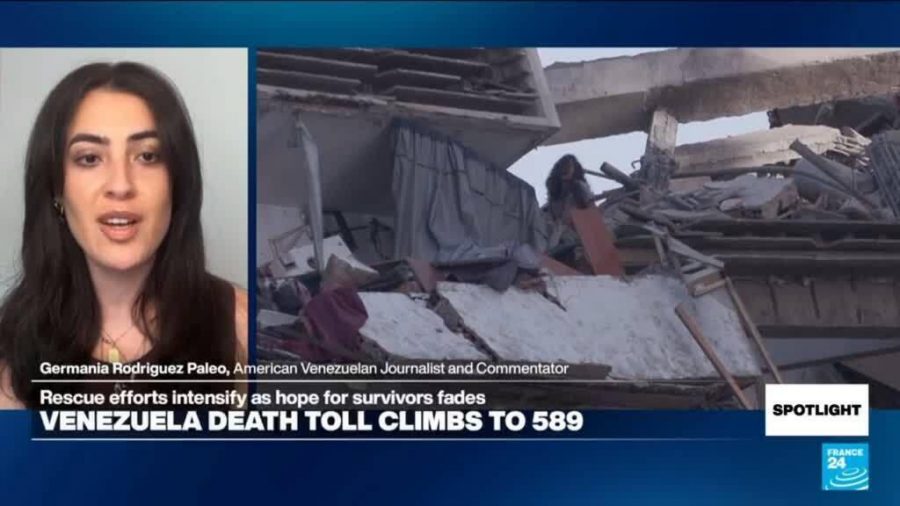
Venezuela’s Earthquake Tragedy: A Reflection on Institutional Failure
As the dust settles from the devastating earthquake that struck Venezuela, the nation grapples with the profound loss of life and the overwhelming humanitarian crisis that has unfolded in its wake. In an exclusive interview, American Venezuelan journalist Germania Rodriguez Paleo provides a poignant analysis of how decades of institutional collapse have exacerbated the effects of this natural disaster.
A Natural Disaster Unveils a Deeper Crisis
The earthquake, a force of nature that struck without warning, is not merely a geological event but a stark reminder of the vulnerabilities that plague Venezuela. Rodriguez Paleo emphasizes that while earthquakes are unpredictable, the scale of devastation and the subsequent humanitarian catastrophe can often be attributed to systemic failures.
Human Cost of Institutional Collapse
“Countless lives lost that in a normal country would have been saved,” Rodriguez Paleo states, pointing out that the lack of effective emergency response systems and inadequate infrastructure are direct consequences of years of political mismanagement. In the aftermath of the earthquake, hospitals, already strained by economic decline and a health crisis, were overwhelmed, unable to accommodate the influx of injured victims.
The Role of Government and Governance
Venezuela’s government has faced years of criticism for its handling of various crises, from food shortages to political repression. This earthquake has further illuminated the consequences of governance that prioritizes control over the wellbeing of its citizens. Rodriguez Paleo argues that the current administration’s failure to invest in disaster preparedness and infrastructure development has left vulnerable communities in peril.
Voices from Affected Communities
In the wake of the earthquake, stories emerge from affected communities that highlight the human experience behind the statistics. Families are now in mourning, and many have lost their homes. Rodriguez Paleo recounts the heartbreaking tales of individuals who have lost loved ones, their homes reduced to rubble, and their lives irrevocably altered.
International Response and Solidarity
The international community has begun to respond, with humanitarian aid being mobilized from various countries. However, Rodriguez Paleo warns that foreign assistance may be hampered by bureaucratic hurdles and the Venezuelan government’s reluctance to accept outside help. “The need for aid is urgent, but we must remember that the political landscape complicates the delivery of assistance,” she cautions.
Hope Amidst Despair
Despite the overwhelming challenges, there are glimmers of hope. Local organizations and activists are working tirelessly to provide support to those affected by the earthquake, showcasing the resilience of the Venezuelan people. Rodriguez Paleo emphasizes that this disaster could serve as a catalyst for change, prompting a reevaluation of governance and a renewed commitment to rebuilding a more resilient society.
Conclusion
The recent earthquake in Venezuela has exposed the fragile state of a nation struggling under the weight of its own institutional failures. As the country mourns its losses, the path forward requires not only immediate humanitarian relief but also a long-term commitment to rebuilding and reforming the systems that have failed its citizens. As Rodriguez Paleo poignantly states, now is the time for reflection, action, and a concerted effort to ensure that such a tragedy does not happen again.