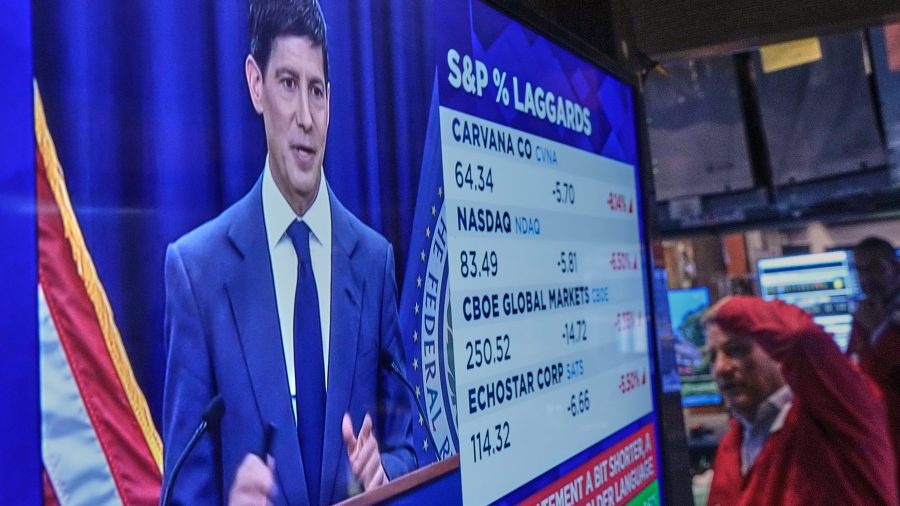
Warsh Advocates for Market-Driven Federal Reserve Policies
In a landscape marked by unprecedented economic challenges, former Federal Reserve governor Kevin Warsh is making a strong case for a shift in the way monetary policy is crafted in the United States. He argues that markets should take the lead in guiding the Federal Reserve’s decisions, rather than the traditional approach where the Fed dictates market conditions.
The Current State of Monetary Policy
As the U.S. economy grapples with inflationary pressures and fluctuating interest rates, Warsh’s perspective raises questions about the effectiveness of the Fed’s current policy framework. With inflation rates soaring to levels not seen in decades, many economists and policymakers are debating the appropriate measures to stabilize the economy.
Warsh, who served on the Fed’s board from 2006 until 2011, believes that a more market-oriented approach could provide the necessary flexibility and responsiveness to rapidly changing economic conditions. “If the markets are allowed to guide the Fed, we can achieve a more dynamic and adaptive monetary policy that reflects real-time economic realities,” he stated in a recent interview.
The Case for Market Guidance
One of the core arguments Warsh presents is that the financial markets often have a better grasp of economic conditions than policymakers. He asserts that by listening to market signals—such as bond yields and stock prices—the Fed can make more informed decisions that align with the needs of the economy. This could mean adjusting interest rates more frequently based on market indicators rather than sticking to a predetermined schedule.
Warsh emphasizes that the Fed must evolve from its current approach, which he describes as overly prescriptive. The traditional model, he claims, can lead to a disconnect between monetary policy and economic realities, potentially exacerbating issues like inflation or stalling growth.
Challenges Ahead
However, this shift is not without its challenges. Critics of Warsh’s proposal argue that relying too heavily on market signals could lead to increased volatility and uncertainty. Financial markets can be influenced by a range of factors, including investor sentiment and geopolitical events, which may not accurately reflect the underlying economy.
Moreover, there are concerns that a market-driven approach might undermine the Fed’s independence, a cornerstone of its ability to manage inflation and support full employment. Warsh acknowledges these concerns but argues that a balanced approach can be achieved by integrating market signals while still maintaining the Fed’s fundamental objectives.
Looking Forward
As the Federal Reserve prepares for future meetings and policy decisions, Warsh’s ideas are gaining traction among a growing number of economists and market analysts. The ongoing debate highlights a critical juncture in U.S. monetary policy as the Fed navigates through an era of economic uncertainty.
In conclusion, while the path to a more market-driven Federal Reserve may be fraught with challenges, Warsh’s call for reform resonates in a time when economic adaptability is paramount. As the Fed continues to confront inflationary pressures and the complexities of the global economy, the question remains: will policymakers heed the call for a new approach, or will they remain steadfast in their traditional methods?