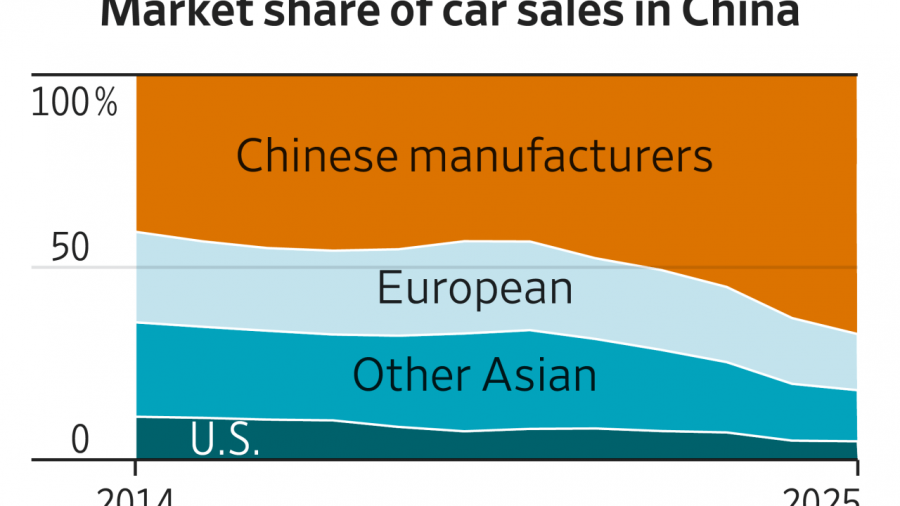
In recent years, the landscape of the automotive industry has undergone a seismic shift, particularly in China, the world’s largest car market. Western automakers, once regarded as leaders in innovation and quality, are finding themselves increasingly overshadowed by local electric vehicle (EV) manufacturers. These homegrown companies have adopted a more agile, tech-focused approach that resonates with Chinese consumers, leading to a dramatic transformation in market dynamics.
The Rise of Local EV Brands
The past decade has seen the emergence of numerous local EV brands such as NIO, Xpeng, and Li Auto, which have captured the imagination of Chinese buyers. These companies are not just assembling vehicles; they are redefining what it means to drive in China. By leveraging cutting-edge technology, these brands have created vehicles that are not only environmentally friendly but also equipped with advanced features that appeal to a tech-savvy population.
Tech-First Approach
Local manufacturers have prioritized a tech-first approach, integrating sophisticated software and hardware to enhance the driving experience. Features such as autonomous driving capabilities, over-the-air updates, and smart connectivity have become standard in many new models. This emphasis on innovation has helped local brands carve out a loyal customer base that values modern technology as much as traditional automotive qualities.
Challenges for Western Brands
Despite their historical prowess, Western automakers are struggling to maintain their foothold in this rapidly evolving market. Many have been slow to adapt to the preferences of Chinese consumers, who increasingly favor electric vehicles over traditional gasoline-powered cars. Additionally, the bureaucratic processes and longer development timelines typical of large Western corporations hinder their ability to respond swiftly to changing market demands.
Consumer Preferences Shift
Chinese consumers are drawn to the local brands that understand their needs and aspirations. Unlike foreign automakers, local companies have invested heavily in research and development to create vehicles that specifically cater to the tastes and preferences of Chinese buyers. This includes not just aesthetics but also functionalities that resonate with the lifestyle of urban dwellers.
Government Support and Policy Favorability
The Chinese government has also played a significant role in this shift. By implementing favorable policies and incentives for electric vehicles, the government has bolstered the growth of local manufacturers. Subsidies, tax breaks, and investments in charging infrastructure have all contributed to an environment where local EV brands can thrive, while foreign companies face mounting pressures and challenges.
Future Outlook
As the competition intensifies, Western automakers must reevaluate their strategies if they hope to regain lost ground. Some have begun forming partnerships with local firms to leverage their expertise and insights into the Chinese market. Others are ramping up their investment in electric vehicle technology and infrastructure to meet the demands of a rapidly changing landscape.
A New Era in the Automotive Industry
The battle for dominance in China’s automotive market marks the beginning of a new era, one where local manufacturers have proven their capability to not only compete but thrive against established giants. As they continue to innovate and evolve, the question remains whether Western brands can adapt quickly enough to remain relevant in a market that is increasingly defined by local preferences and technological advancements.
- Local EV brands are capturing market share with innovative technology.
- Western automakers face challenges in adapting to consumer preferences.
- The Chinese government supports local manufacturers through favorable policies.
- Future strategies for Western companies may include partnerships with local firms.
In conclusion, the shifting tides in the Chinese automotive industry highlight the necessity for Western automakers to rethink their approach in order to compete effectively in a market that is evolving at an unprecedented pace.