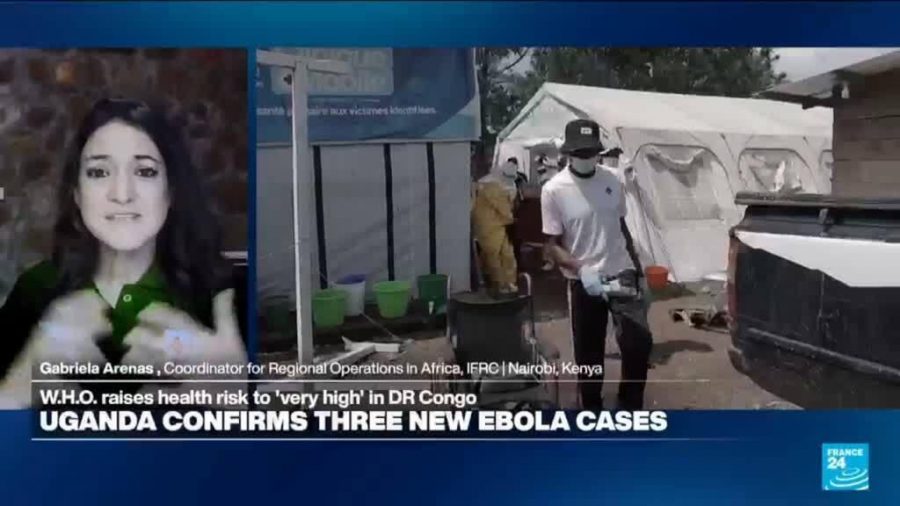
The World Health Organization (WHO) has officially raised the health risk posed by Ebola in the Democratic Republic of Congo (DRC) to ‘very high’ following a worrying surge in cases. Meanwhile, neighboring Uganda has reported new cases, underscoring the regional threat posed by the deadly virus.
Ebola Cases Surge in DRC Amid Rising Alarm
Since the outbreak began, the DRC has been grappling with one of the most severe Ebola epidemics in recent history. The WHO’s decision to upgrade the health risk level comes as the number of confirmed cases continues to climb, with health officials warning that the situation could deteriorate further if immediate action is not taken.
Gabriela Arenas, Coordinator for Regional Operations in Africa for the International Federation of Red Cross and Red Crescent Societies (IFRC), emphasized the urgency of the situation during a recent interview. “The increasing number of cases highlights the critical need for enhanced health measures and international cooperation,” she stated.
Uganda Reports Spillover Cases
In a concerning development, Uganda has reported new cases of Ebola, sparking fears of cross-border transmission. Health authorities in Uganda have ramped up efforts to contain the virus, including increased surveillance at border checkpoints and stricter protocols in healthcare facilities.
“The proximity of this outbreak to international borders is a major challenge,” Arenas noted. “It’s crucial that neighboring countries remain vigilant and prepared to respond swiftly to any potential spread.”
What is Being Done to Contain the Outbreak?
The WHO, along with international partners, is working closely with local governments to combat the spread of Ebola. Key measures include:
- Vaccination Campaigns: Thousands of people in high-risk areas have already been vaccinated, and efforts are underway to expand coverage.
- Community Engagement: Educating communities about prevention measures is a critical component of the response strategy.
- Increased Funding: The WHO has called for more financial support to sustain ongoing efforts and address urgent needs on the ground.
- Strengthened Surveillance: Cross-border monitoring and rapid response teams have been deployed to track and contain the virus.
Despite these efforts, challenges remain. The DRC’s volatile security situation has complicated response activities, with some regions facing limited access due to conflict and instability. This has hindered healthcare workers’ ability to reach affected communities and deliver life-saving interventions.
The Global Implications of the Outbreak
Ebola is not just a regional concern; it poses a global health risk. The WHO’s decision to raise the threat level is a stark reminder of the potential for the virus to spread beyond the African continent. Past outbreaks have shown how rapidly Ebola can cross borders, making it imperative for nations worldwide to remain alert.
Gabriela Arenas urged the international community to act decisively. “We’ve seen how quickly this virus can spiral out of control. It’s not just a health crisis for Africa; it’s a global issue that demands a coordinated, robust response,” she explained.
A Call to Action
As the DRC and Uganda confront the escalating Ebola threat, the world watches with bated breath. The WHO, IFRC, and other global health organizations are calling for solidarity and swift action to curb the outbreak before it spirals further out of control.
“Time is of the essence,” Arenas concluded. “We must act now to save lives and prevent a wider catastrophe.”