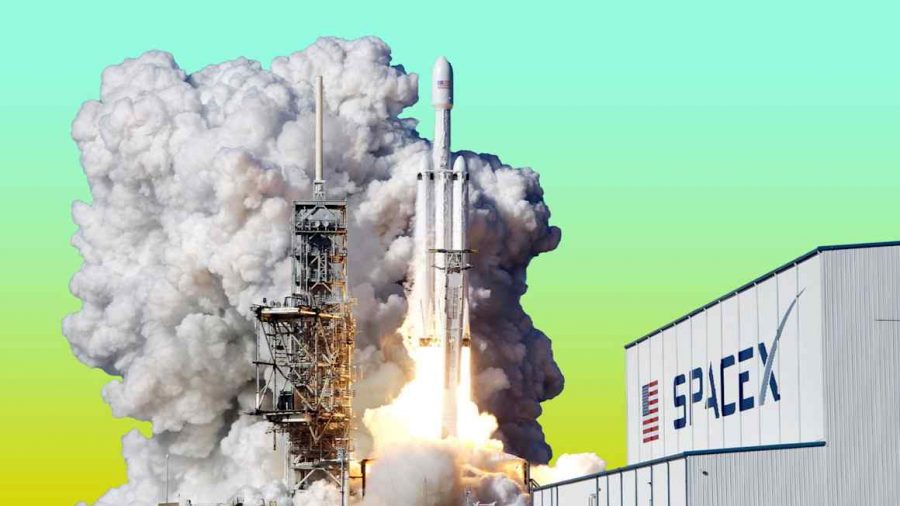
In the ever-evolving landscape of space exploration and commercial spaceflight, SpaceX stands out not only for its ambitious goals but also for its unique approach to valuation. Unlike traditional companies, SpaceX operates on a price-to-cosmos ratio that transcends terrestrial financial metrics, making it a fascinating case study in modern economics.
Understanding SpaceX’s Unique Valuation
When evaluating a company, investors typically rely on standard financial ratios such as price-to-earnings (P/E) or price-to-sales (P/S). However, SpaceX, led by the visionary Elon Musk, operates in a realm where such earthly valuations seem inadequate. The company’s focus on space travel, satellite deployment, and interplanetary colonization creates a value proposition that is difficult to quantify using conventional metrics.
The Price-to-Cosmos Ratio
The concept of a price-to-cosmos ratio suggests that SpaceX’s valuation should be considered in the context of its extraordinary ambitions. While traditional companies are evaluated based on profit margins and revenue growth, SpaceX’s worth is tied to its potential to revolutionize space travel, reduce costs for launching payloads, and pave the way for human life on other planets.
For instance, SpaceX’s Falcon 9 rocket has significantly decreased the cost of launching satellites into orbit, making it an attractive option for both commercial and governmental clients. This innovation not only showcases the company’s technical prowess but also illustrates how its mission can redefine the economics of space.
Elon Musk’s Vision and Market Perception
Elon Musk’s vision for SpaceX extends far beyond mere profitability. His ambitious goals, including the colonization of Mars and the establishment of a sustainable human presence in space, contribute to a market perception that often defies traditional valuation metrics. Investors are not just buying shares in a rocket company; they are investing in the future of humanity and its potential expansion into the cosmos.
Investor Sentiment and Market Dynamics
Investor sentiment plays a crucial role in SpaceX’s valuation. The excitement surrounding space exploration has led to a surge in interest from both institutional and retail investors. This enthusiasm can drive valuations higher than what would be expected based on traditional financial data.
Moreover, SpaceX’s recent funding rounds have further solidified its position in the market. With investors willing to bet on the long-term potential of space travel, SpaceX has secured billions in funding, allowing it to invest in new technologies and expand its operations.
The Future of SpaceX and Space Exploration
As we look to the future, SpaceX’s role in shaping the landscape of space exploration is undeniable. With ambitious projects like Starship, intended for missions to Mars and beyond, the company continues to push the boundaries of what is possible. Its success could redefine not only how we view space travel but also the economic models that underpin it.
Conclusion: A New Era of Valuation
In conclusion, SpaceX’s valuation reflects a paradigm shift in how we think about companies operating beyond Earth. The price-to-cosmos ratio may seem unconventional, but it captures the essence of what SpaceX represents: a bold leap into the unknown that challenges the traditional norms of financial assessment. As the company continues to innovate and inspire, it stands as a testament to the idea that some ventures are worth more than the sum of their earthly parts.