Understanding the Roots of Xenophobia in South Africa
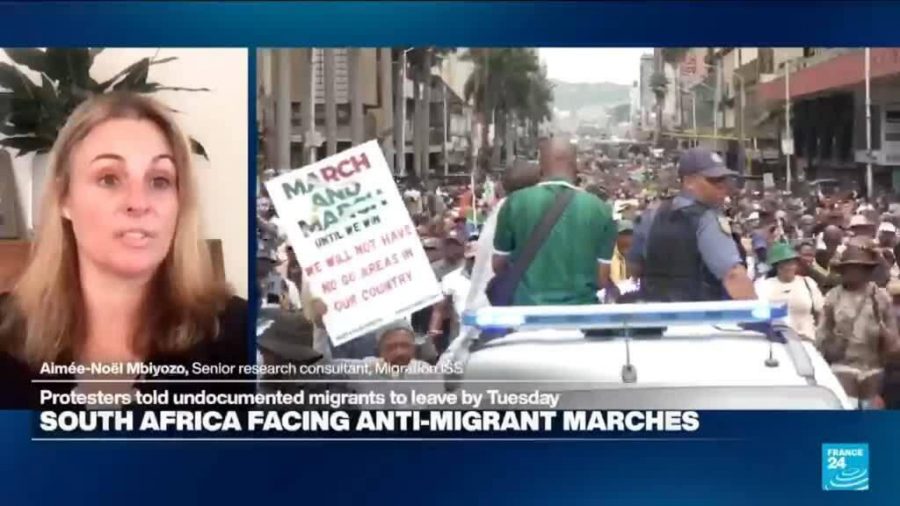
In recent years, South Africa has witnessed a troubling resurgence of anti-immigrant sentiment, a phenomenon that raises critical questions about the intersection of politics and societal issues. At the forefront of this discussion is Aimée-Noel Mbiyozo, Senior Research Consultant at the Institute for Security Studies (ISS), who provides valuable insights into the complex dynamics driving these xenophobic sentiments.
The Political Context of Xenophobia
According to Mbiyozo, the waves of anti-migrant mobilization in South Africa are symptomatic of a broader political and socioeconomic paradox. Public frustration regarding rampant unemployment, stark inequality, pervasive corruption, and the deteriorating quality of public services has reached a boiling point. However, rather than addressing these deep-rooted issues, politicians often find it politically expedient to direct public anger towards immigrants.
Migrants as Scapegoats
Mbiyozo argues that, although the frustrations of the South African populace are genuine, migrants have been unjustly transformed into convenient scapegoats. This scapegoating serves a dual purpose: it distracts from the real sources of societal problems and allows political leaders to bolster their own positions by rallying nationalist sentiments. By vilifying immigrants, politicians can create a narrative that oversimplifies complex economic and social challenges, offering seemingly straightforward solutions that do not actually address the underlying systemic issues.
Evidence vs. Narratives
Drawing on comprehensive migration data and an analysis of governance failures, Mbiyozo highlights that the continued popularity of anti-migrant narratives is not rooted in evidence but rather in their political utility. These narratives thrive in an environment where the public seeks explanations for their struggles, and the presence of migrants is an easy target for blame. This dynamic has been observed not only in South Africa but across various nations grappling with similar socioeconomic challenges.
Consequences of Xenophobia
The consequences of this xenophobic rhetoric are profound and far-reaching. Migrants in South Africa, who often contribute significantly to the economy and local communities, find themselves facing hostility and violence. The social fabric of the country is strained as divisions deepen and communities become polarized along ethnic and national lines. Furthermore, these tensions can lead to violent outbreaks, as seen in previous incidents where foreign nationals were attacked and their businesses looted.
Addressing the Underlying Issues
Mbiyozo emphasizes the necessity of addressing the structural crises that give rise to such xenophobic sentiments. This includes grappling with the realities of the labor market, where competition for jobs is fierce and inequality continues to widen. It is imperative for policymakers to shift the focus from scapegoating immigrants to implementing strategies that promote inclusive economic growth and enhance service delivery.
Conclusion: A Call for Compassion and Understanding
Ultimately, combating xenophobia in South Africa requires a collective effort to foster understanding and compassion among communities. By recognizing that immigrants are not the source of the country’s woes but rather part of a diverse society that can contribute to its future, South Africans can begin to dismantle the narratives that fuel division. As Mbiyozo points out, the challenge lies not in the presence of migrants but in addressing the complex realities that challenge the nation today.