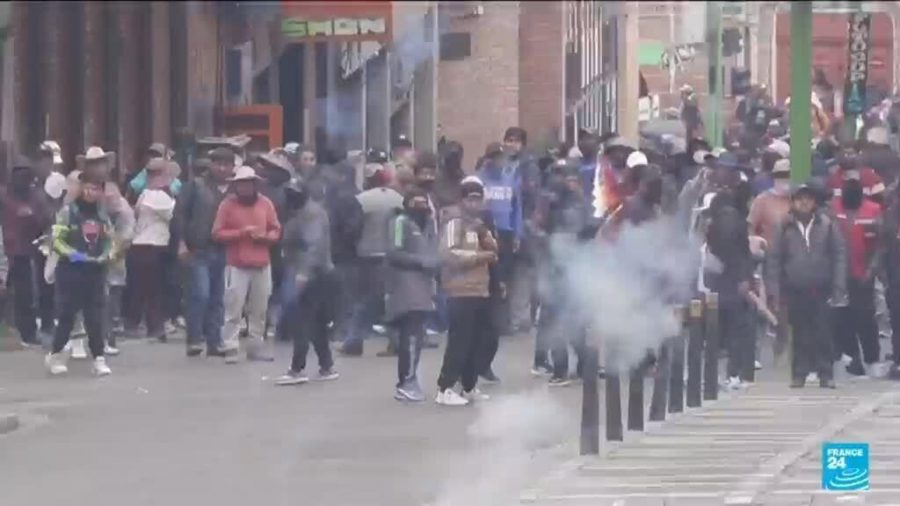
Bolivia’s capital, La Paz, became a flashpoint of unrest on Friday as riot police confronted anti-government protesters for the second time this week. The demonstrations, led by unions and Indigenous groups, have escalated in their demand for President Rodrigo Paz to resign, citing grievances over alleged corruption and policies they claim harm grassroots communities.
Mounting Unrest in Bolivia
The protests, which began as peaceful marches, quickly turned volatile as demonstrators clashed with security forces near the city center. Tear gas filled the air as riot police sought to disperse crowds, while protesters retaliated by throwing rocks and chanting slogans calling for Paz’s resignation.
Eyewitnesses reported scenes of chaos, with shopkeepers hurriedly shutting their doors and bystanders seeking shelter from the escalating violence. The government has yet to publicly address the latest clashes, though officials have previously labeled the protesters as “radicals attempting to destabilize the nation.”
Key Demands of the Protesters
The protests are being driven by a coalition of labor unions and Indigenous organizations, which claim that the Paz administration has prioritized foreign investment and corporate interests over the welfare of Bolivia’s most vulnerable populations. Among their primary demands are:
- President Rodrigo Paz’s immediate resignation.
- A complete overhaul of economic policies perceived as exploitative.
- Increased protections for Indigenous lands and communities.
“We are tired of being ignored,” said Maria Quispe, an Indigenous leader from the highlands. “This government has betrayed its promises to the people who trusted it most.”
A Divided Nation
The protests have highlighted stark divisions within Bolivia, with some citizens expressing support for the demonstrators’ grievances, while others criticize the unrest for disrupting daily life and economic activities. Analysts warn that the ongoing turmoil could further polarize the country, which has faced political instability in recent years.
“Bolivia is at a crossroads,” said political analyst Javier Mendoza. “The government must take these concerns seriously if it hopes to avoid a deeper crisis.”
As tensions continue to rise, international organizations have called for dialogue between the government and protest leaders. However, with neither side showing signs of backing down, the path to resolution remains unclear.