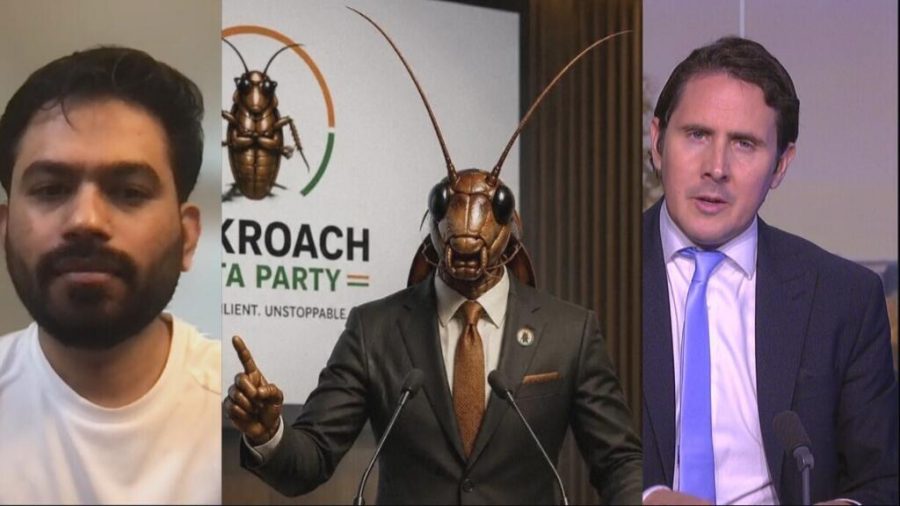
What started as an online jest has spiraled into a surprising grassroots political movement, with millions of Indians rallying behind an unconventional symbol: the cockroach. The Cockroach Party, conceived just ten days ago by Abhijeet Dipke, a public relations student, has captured the imagination of 23 million followers on social media, sparking heated debates across the nation.
The Humble Beginnings of the Cockroach Party
The party’s origins can be traced to a satirical response to a controversial comment made by a judge in India’s Supreme Court. Abhijeet Dipke, frustrated by what he perceived as an out-of-touch ruling, created the Cockroach Party as a parody of the judicial system’s perceived insensitivity. What he did not anticipate, however, was the resonance this act of satire would have on a national scale.
“I never intended for it to grow this big,” Abhijeet said in an interview with France 24’s Gavin Lee. “It was just a way to highlight absurdity through humor – but it seems like the symbol of the cockroach has struck a chord with people who feel ignored and voiceless in the political system.”
From Viral Sensation to Grassroots Movement
The Cockroach Party’s meteoric rise is largely attributed to its shrewd use of social media platforms. Memes, tweets, and posts flooded the internet, with supporters championing the cockroach as a metaphor for resilience and survival in the face of adversity. The movement quickly gained momentum among India’s youth, many of whom were disillusioned by traditional political parties.
Critics, however, have been quick to question the party’s legitimacy. Some, particularly those aligned with the government, have dismissed it as a “Trojan horse” for opposition forces seeking to destabilize the current administration. In response, Abhijeet has maintained that the party is apolitical at its core, aiming only to give a voice to marginalized perspectives.
What Does the Cockroach Party Stand For?
Despite its satirical origins, the Cockroach Party has begun to articulate a clear set of values that resonate with its supporters. These include:
- Resilience: Advocating for policies that support the underprivileged and marginalized communities, much like the cockroach’s ability to thrive in difficult conditions.
- Transparency: Calling for greater accountability and openness in governance.
- Inclusivity: Emphasizing the importance of representing all voices, particularly those often overlooked by the political establishment.
Abhijeet has been careful to steer the party away from specific political affiliations, focusing instead on broader issues like corruption, climate change, and unemployment. This strategy has only fueled speculation about the party’s true intentions, with some accusing it of being a populist gimmick.
The Road Ahead
As the Cockroach Party continues to gain traction, its future remains uncertain. Will it evolve into a legitimate political force, or will it fade as quickly as it appeared? For now, what is clear is that the movement has tapped into a deep well of public discontent, forcing India’s traditional political players to take notice.
“The cockroach is a survivor,” Abhijeet remarked with a wry smile. “Maybe that’s what India needs right now – a symbol of persistence and adaptability.”
As the country watches this unlikely phenomenon unfold, one thing is certain: the Cockroach Party has already made its mark, proving that even the smallest creatures can inspire the biggest conversations.