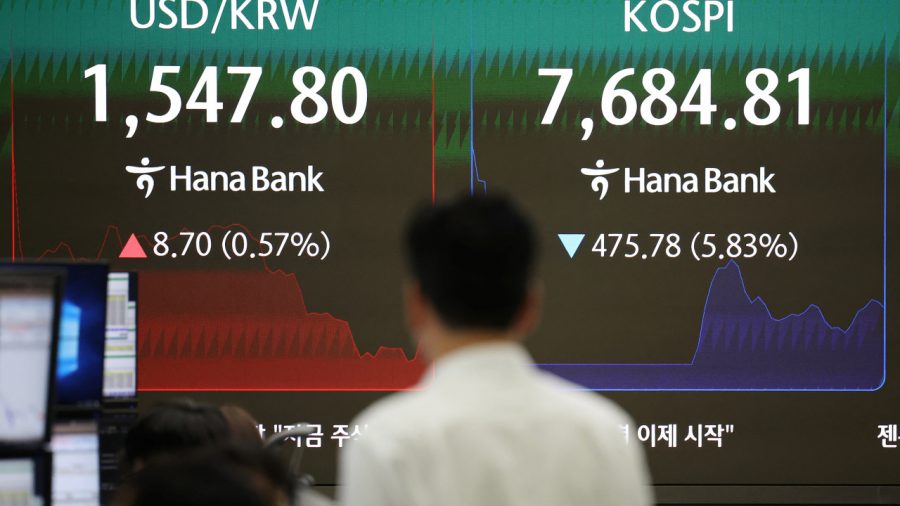
South Korean Authorities Call for Enhanced Banking Controls Amid Won Decline
In a significant move to stabilize the nation’s economy, South Korean authorities have urged banks to implement stricter controls in response to a sharp decline in the value of the Korean won. This call to action comes as officials express concern over what they describe as “speculative market-disrupting behavior” that threatens to undermine the country’s financial stability.
The State of the Korean Won
Recently, the Korean won has faced intense pressure, falling against major currencies and raising alarms within the financial community. Analysts attribute this decline to a combination of global economic factors, including rising interest rates in the United States and ongoing geopolitical tensions in the region. As the won weakens, the cost of imports rises, leading to inflationary pressures that could further strain the South Korean economy.
Authorities’ Response
The South Korean government, led by the Bank of Korea (BOK), has responded by calling on domestic banks to enhance their oversight measures. These measures are aimed at countering speculative trading practices that could exacerbate the won’s volatility. The BOK has emphasized the importance of maintaining market integrity and ensuring that all banking institutions are equipped to handle potential risks associated with currency fluctuations.
The Role of Speculative Trading
Speculative trading refers to the practice of buying and selling financial instruments, such as currencies, with the expectation of making a profit from short-term price movements. While such activities can provide liquidity to the market, they can also lead to significant volatility, particularly in times of economic uncertainty. South Korean officials have expressed concerns that excessive speculation could lead to a self-reinforcing cycle of depreciation for the won, making it imperative for banks to act decisively.
Banking Sector’s Commitment
In response to the government’s call, several major banks in South Korea have begun reviewing their internal policies concerning foreign exchange trading. These reviews aim to identify potential loopholes that could be exploited by speculators. Banks are also expected to enhance their risk assessment frameworks to better monitor and mitigate the impacts of sudden market fluctuations.
Impact on the Economy
The decline of the won has far-reaching implications for South Korea’s economy. As a major exporter, South Korea relies heavily on a stable currency to maintain its competitive edge in global markets. A weaker won can make South Korean goods cheaper for foreign buyers, potentially boosting exports. However, it also increases the cost of imports, which can squeeze domestic consumers and businesses that rely on foreign goods.
Future Outlook
Looking ahead, analysts believe that the South Korean economy faces a challenging period as it navigates these turbulent waters. The government’s proactive stance in urging banks to strengthen controls is a critical step in stabilizing the currency. However, the effectiveness of these measures will depend largely on broader global economic conditions and the ability of South Korean policymakers to respond swiftly to emerging challenges.
Conclusion
As South Korea grapples with the decline of the won, the call for enhanced banking controls highlights the delicate balance between fostering market activity and maintaining stability. With authorities and financial institutions working collaboratively, there is hope that the measures implemented will help mitigate the risks associated with speculative trading and ultimately steer the economy toward a more stable path.