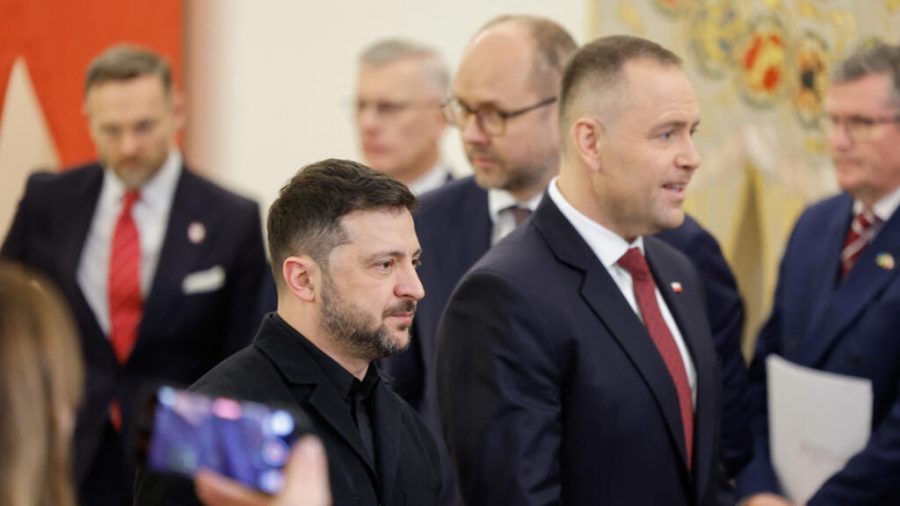
Poland Revokes Ukrainian President Zelensky’s Highest Honor
In a significant escalation of historical tensions between Poland and Ukraine, Polish President Karol Nawrocki announced on Friday the revocation of the country’s highest honor from Ukrainian President Volodymyr Zelensky. This decision comes in light of Zelensky’s controversial naming of a Ukrainian military unit after a World War II insurgent militia that was responsible for the massacre of Polish citizens.
A Historical Context
The decision to strip Zelensky of the award marks a serious diplomatic rift at a time when Poland and Ukraine have been united in their efforts against Russian aggression. The historical grievances stemming from World War II have long influenced Polish-Ukrainian relations, and the recent actions by Zelensky have reignited these sensitive issues.
Reactions from Polish Leadership
President Nawrocki, representing the nationalist sentiments prevalent in Poland, expressed deep disappointment over Zelensky’s choice to honor the controversial militia, stating that it undermines the sacrifices made by Polish victims. This sentiment was echoed by Polish Prime Minister Donald Tusk, who earlier urged both nations to prioritize their solidarity amidst the ongoing Russian invasion of Ukraine. “We cannot afford to waste our mutual support and understanding during this critical time,” Tusk emphasized.
The Impact of Historical Memory
The naming of the Ukrainian military unit has been met with outrage in Poland, where the memory of the Volhynia massacres—where tens of thousands of Poles were killed by Ukrainian nationalists during World War II—remains a sensitive topic. This dark chapter in history continues to shape Polish national identity and informs public sentiment towards Ukraine.
For many Poles, the decision to honor a unit associated with such a tragic past feels like a betrayal, particularly when solidarity is needed to fend off the looming threat posed by Russia. The historical grievances are not easily forgotten, and this recent incident has brought them to the forefront of public discourse.
The Path Forward
As the tensions rise, both nations are faced with the challenge of reconciling their shared history while navigating the current geopolitical landscape. The revocation of Zelensky’s honor serves as a stark reminder of the fragility of diplomatic relations, especially when intertwined with complex historical narratives.
Experts suggest that open dialogue and mutual acknowledgment of past grievances may be essential in mending the frayed ties between the two countries. As Ukraine continues to battle Russian forces, the need for a united front against external threats remains paramount.
Conclusion
The revocation of the honor bestowed upon President Zelensky illustrates the delicate balance between historical memory and current alliances. As both countries strive to maintain their partnership in the face of adversity, the importance of understanding and addressing historical grievances cannot be overstated. Moving forward, it will be crucial for Polish and Ukrainian leaders to find a way to honor their past while forging a path towards a collaborative future.