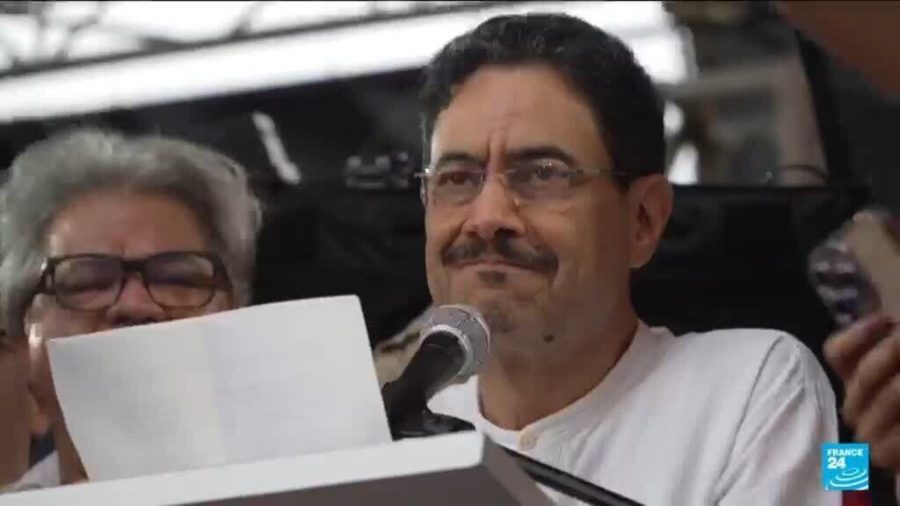
Colombia’s Pivotal Election: Who is Ivan Cepeda?
This Sunday, Colombians will make a crucial decision as they head to the polls for the second round of the presidential election. The contest pits left-wing candidate Ivan Cepeda against far-right contender Abelardo de la Espriella, marking a significant moment in the country’s political landscape.
An Ascendant Political Figure
Ivan Cepeda emerges as a key figure in this election, not just as a candidate but as a political heir to outgoing president Gustavo Petro. Cepeda’s background is deeply rooted in Colombia’s tumultuous political history, characterized by years of conflict, social injustice, and a persistent struggle for peace.
Early Life and Political Awakening
Born in Bogotá, Colombia, Cepeda grew up in a politically active family. His father, Manuel Cepeda Vargas, was a prominent member of the Patriotic Union, a leftist political party that faced severe persecution during the late 20th century. This early exposure to the harsh realities of political violence and social inequality shaped Cepeda’s worldview and ignited his passion for social justice.
Political Career
Before stepping into the presidential race, Cepeda served multiple terms as a senator, where he became known for his advocacy on human rights issues and peace processes. His legislative work has focused on addressing the needs of marginalized communities, a commitment that resonates deeply with voters who have felt neglected by the political elite.
Campaign Promises and Vision
Cepeda’s campaign is built on a platform of progressive reforms aimed at tackling Colombia’s most pressing issues, including poverty, inequality, and violence. He has articulated a vision for a more inclusive society, where economic opportunities are accessible to all, and where the legacies of past injustices are confronted head-on.
One of the cornerstone promises of his campaign is to strengthen peace agreements with guerrilla groups and to better implement policies that address the root causes of violence. Cepeda believes that sustainable peace can only be achieved through social development and the protection of human rights.
Challenges Ahead
Despite his strong grassroots support, Cepeda faces significant challenges in the election. The political landscape in Colombia remains polarized, with deep-seated divisions between leftist and rightist factions. His opponent, Abelardo de la Espriella, represents a far-right ideology that has garnered considerable backing from conservative sectors of society.
Moreover, Cepeda’s association with Gustavo Petro comes with its own set of challenges, as Petro’s presidency has faced criticism on various fronts, including handling economic issues and security concerns. However, Cepeda aims to differentiate himself by emphasizing his commitment to a more participatory and inclusive political process.
The Stakes of the Election
This election is not merely about choosing a new president; it represents a broader struggle over the future direction of Colombia. Voters are faced with a fundamental choice between continuing down a path of traditional conservatism or embracing progressive change that seeks to dismantle systemic inequalities.
As the polls approach, Cepeda’s supporters are energized, hoping that his candidacy will bring about a transformative shift in Colombian politics. The outcome of this election could redefine the nation’s trajectory and determine whether Colombia moves toward a more equitable and just society.
Conclusion
In a country where the scars of conflict and inequality run deep, Ivan Cepeda stands as a symbol of hope for many Colombians. His vision for a more inclusive and fair Colombia resonates with a populace yearning for change. As voters prepare to make their decision this Sunday, the world watches closely, eager to see how this pivotal moment will shape the future of Colombia.