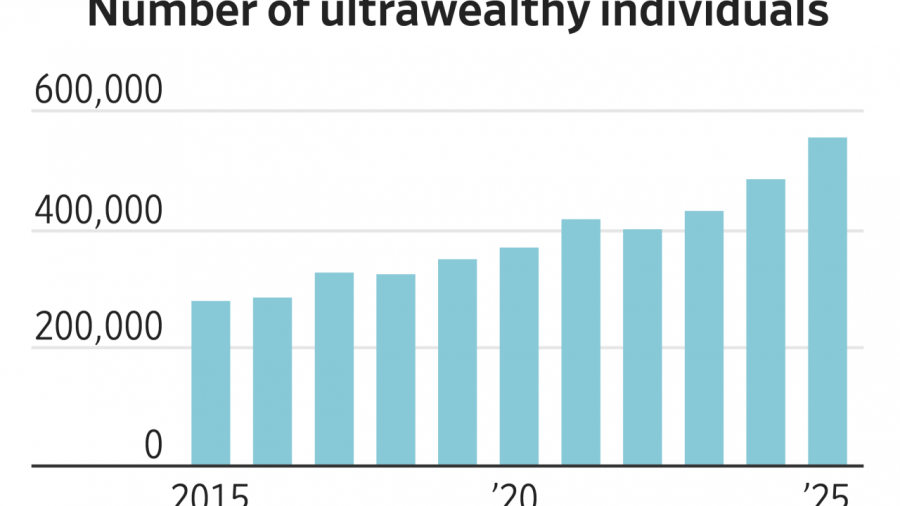
Ultrawealthy Population Surges by 14.4% in 2025
In a remarkable shift reflecting the changing dynamics of wealth distribution, the number of individuals with a net worth exceeding $30 million skyrocketed by 14.4% in 2025. This significant increase not only highlights the growing gap between the ultrawealthy and the rest of the population but also raises questions about the implications for the global economy and society as a whole.
The Rise of the Ultrawealthy
The latest financial reports reveal that the ranks of the ultrawealthy are swelling at an unprecedented rate. In 2025, the population of millionaires and billionaires reached new heights, as global markets rebounded and investment opportunities flourished. This surge is particularly noticeable in regions experiencing rapid economic growth, such as Asia and North America.
Factors Driving Wealth Accumulation
Several factors contribute to the rise in ultrawealthy individuals. Firstly, the post-pandemic recovery has fueled economic growth, leading to increased investment in technology, real estate, and various sectors. Furthermore, central banks’ policies, including low-interest rates and quantitative easing, have created an environment ripe for wealth accumulation.
Investment Opportunities Abound
In 2025, the investment landscape has also evolved significantly, providing new avenues for the wealthy to grow their fortunes. With the advent of cryptocurrencies and alternative assets, ultrawealthy individuals are diversifying their portfolios more than ever. Here are some notable investment trends:
- Cryptocurrencies: The rise of digital currencies has attracted many investors looking for high returns, despite the associated risks.
- Real Estate: Luxury real estate markets are booming, with high-net-worth individuals seeking properties in prime locations.
- Tech Startups: The tech sector continues to attract significant investment, with many wealthy individuals backing innovative startups.
Global Implications of Rising Wealth Disparity
The surge in the ultrawealthy population has raised concerns about income inequality and social justice. As the rich continue to amass wealth, the gap between the wealthy and the middle class is becoming increasingly pronounced. Critics argue that this disparity can lead to social unrest and calls for policy changes to address the growing divide.
Responses from Governments and Economists
In response to these trends, governments and economists are debating potential measures to mitigate the impact of wealth inequality. Some proposed solutions include:
- Progressive Taxation: Implementing higher tax rates on the ultrawealthy to redistribute wealth more equitably.
- Universal Basic Income: Exploring the feasibility of providing a guaranteed income to citizens to alleviate poverty.
- Investment in Public Services: Increasing funding for education, healthcare, and infrastructure to support lower-income populations.
Looking Ahead
As we move further into 2025, it remains to be seen how the growing ranks of the ultrawealthy will influence global economies and societies. While their financial power brings opportunities for investment and economic development, it also necessitates a critical examination of the systems that allow for such vast disparities in wealth.
Ultimately, addressing the challenges posed by the rise of the ultrawealthy will require collaborative efforts from governments, businesses, and communities to ensure a more equitable future for all.