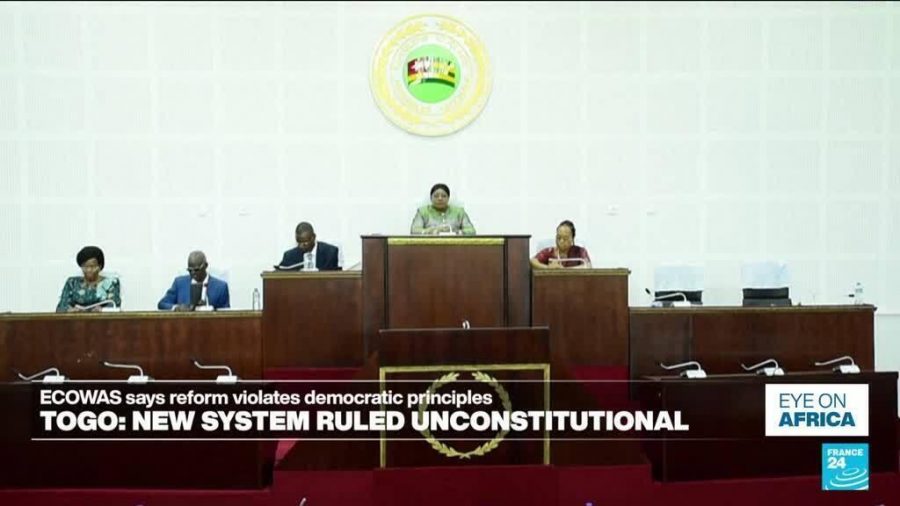
Togo’s Shift to Parliamentary System Faces Legal Setback
Togo’s recent transition to a parliamentary system has come under intense scrutiny after a regional court declared the reforms unconstitutional. This ruling not only questions the legitimacy of the new governance structure but also raises broader concerns about the political landscape in Togo, a nation grappling with its democratic identity.
Background on the Reforms
In an attempt to modernize its political framework, the Togolese government initiated reforms aimed at transitioning from a presidential to a parliamentary system. Proponents of the change argued that a parliamentary system would enhance accountability and foster a more inclusive political dialogue. However, critics have voiced concerns about the timing and implementation of these reforms, especially given the country’s recent history of political instability.
Regional Court’s Ruling
The regional court’s decision has sent shockwaves through the political community in Togo. It ruled that the parliamentary reforms violated the constitution, calling into question the legality of actions taken under the new system. This ruling has implications not only for the current government but also for the future of democracy in Togo.
Public Reaction and Implications
The court’s ruling has ignited a wave of public debate. Many citizens are left wondering about the future of governance in Togo. Public protests have erupted in various cities, with citizens demanding clarity on the path forward. While some citizens support the return to a more traditional governance model, others advocate for the continuation of reforms that promise to democratize the political system.
Lake Tana: A Jewel Under Siege
Meanwhile, far from Togo, the situation in Ethiopia’s Lake Tana is equally dire. Once a shining star in Ethiopia’s tourism sector, this ancient lake now finds itself overshadowed by ongoing conflict. The area, known for its rich cultural heritage and diverse ecosystems, is under threat as tensions escalate. The conflict has not only hindered tourism but has also raised concerns about the preservation of the area’s unique biodiversity.
Preservation Efforts for Cyrene and Apollonia
In another part of Africa, archaeologists are racing against time to preserve the ancient ruins of Cyrene and Apollonia. These UNESCO World Heritage sites, steeped in history, face increasing risks from both conflict and natural disasters. As preservation efforts intensify, the international community is urged to support initiatives aimed at safeguarding these irreplaceable cultural treasures.
Conclusion
The recent developments in Togo, alongside challenges faced in Ethiopia, underscore the fragility of political and cultural landscapes in Africa. As governments navigate complex transitions and conflicts, the need for robust, constitutionally sound frameworks becomes ever more critical. The future of Togo’s democratic journey and the preservation of Africa’s cultural heritage depend on the collective efforts of its people and the international community.