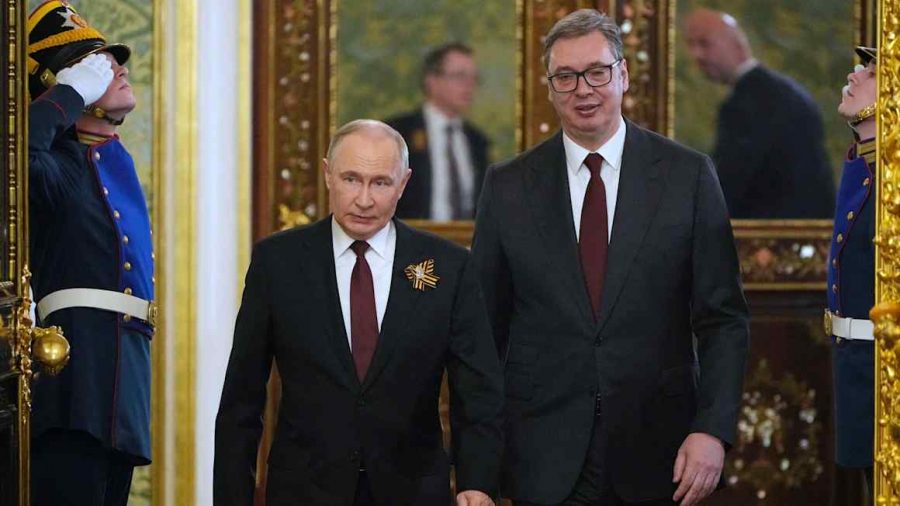
Aleksandar Vučić’s Strategic Move in Serbian Politics
In a surprising announcement that has stirred political currents in Serbia, President Aleksandar Vučić has revealed his intention to step down from the presidency and seek a return to the role of prime minister following snap elections scheduled for this autumn. This strategic maneuver echoes tactics employed by Russian President Vladimir Putin, raising questions about the future of democracy in Serbia.
The Political Landscape in Serbia
Vučić, who has been a dominant figure in Serbian politics for nearly a decade, is known for his strongman leadership style and has cultivated a reputation that mirrors that of Putin. The Serbian leader’s announcement comes amidst growing criticism of his administration’s authoritarian tendencies and increasing discontent among the populace regarding economic conditions and governance.
The upcoming elections are expected to be a pivotal moment for Serbian democracy, as Vučić’s political party, the Serbian Progressive Party (SNS), aims to maintain its grip on power. By stepping down as president, Vučić may be attempting to circumvent mounting scrutiny and reestablish his authority through the prime ministerial role.
Emulating Putin: A Calculated Strategy
Vučić’s strategy appears to be a calculated effort to emulate Putin’s political maneuvering, where leaders often shift roles to retain power while appearing to respect democratic processes. In Russia, this has been seen through frequent changes in presidential and prime ministerial roles, allowing for a continuous hold on power.
Critics argue that Vučić’s tactics undermine genuine democratic practices, fearing that his return to the prime minister’s office would further entrench his control over Serbia’s political landscape. The implications of his strategy are significant, as they could set a precedent for future political leaders in the region.
Public Sentiment and Possible Backlash
Public sentiment in Serbia is increasingly polarized. While Vučić retains a core base of support, opposition parties are gaining traction, fueled by economic woes and allegations of corruption within the government. The snap elections may serve as a referendum on his leadership, with many citizens expressing frustration over rising living costs and dwindling opportunities.
Moreover, the political opposition has rallied to challenge Vučić’s authority, promising to expose what they describe as a declining democratic space under his rule. They argue that his departure from the presidency is merely a façade, designed to maintain his power while appearing to engage with democratic norms.
International Implications
The international community is closely monitoring the situation in Serbia, as Vučić’s leadership has implications beyond national borders. His alignment with Putin has drawn scrutiny, especially as relations between Serbia and Western nations remain strained.
As Vučić prepares for the upcoming elections, his actions will be scrutinized by both supporters and detractors, with many watching closely to see if he can navigate the complexities of Serbian political life while maintaining his power. The outcome of the elections could have lasting effects on Serbia’s democratic integrity and its relationships with neighboring countries and the European Union.
Conclusion
As Aleksandar Vučić embarks on this political transition, the stakes are high for both him and the Serbian people. The upcoming elections will not only determine his future but also the trajectory of democracy in Serbia. With significant parallels to Putin’s regime, Vučić’s actions could signal a new era in Serbian politics, one that may either reinforce or challenge the foundations of democratic governance in the region.