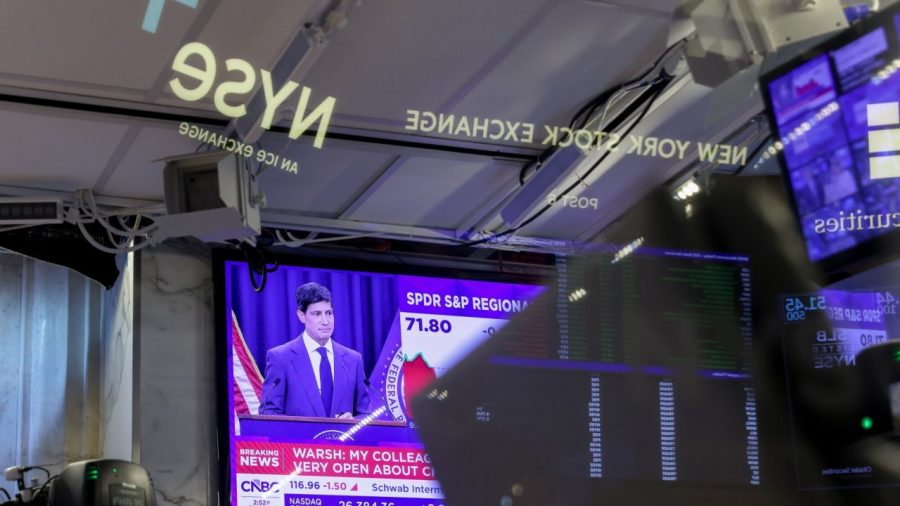
Warsh Advocates for Less Fed Communication to Enhance Market Independence
In an era where financial markets are increasingly intertwined with Federal Reserve communications, the newly appointed chair, Kevin Warsh, is pushing for a significant shift in the way the central bank engages with investors. His approach aims to foster an environment where market movements are more closely aligned with economic fundamentals rather than the Fed’s signaling.
Understanding Warsh’s Philosophy
Warsh, who has a robust background as a former Fed governor and a seasoned financial market practitioner, argues that the Fed’s extensive communication has inadvertently led to over-reliance by investors on the bank’s guidance. He believes that by reducing the frequency and detail of its public pronouncements, the Fed can encourage markets to react more organically to economic data, rather than adjusting their expectations based on central bank narratives.
The Implications for Wall Street
This proposed communication overhaul is sending ripples through Wall Street, where investors are now more attentive than ever to the Fed’s every word. The challenge lies in finding equilibrium; while Warsh seeks to diminish direct guidance, he must also recognize that the market’s interpretation of economic indicators has become intertwined with Fed commentary. The more he encourages silence, the more intensely investors may scrutinize available information.
Market Dynamics in the Age of Fed Communication
Historically, the Fed’s communications have been a double-edged sword for the markets. On one hand, clear guidance can help investors navigate economic uncertainties; on the other, it can create volatility when expectations are not met. Warsh’s strategy aims to stabilize market reactions by reducing the predictability that often accompanies central bank statements.
Challenges Ahead
However, Warsh’s vision is not without its challenges. A significant concern is the potential for increased market volatility in the absence of clear Fed signals. Investors accustomed to a certain level of guidance may find themselves in uncharted territory, leading to heightened speculation and potential misinterpretations of economic data.
- Increased Scrutiny: Investors may now listen more intently, searching for clues in every economic report.
- Market Volatility: A reduction in communication could lead to greater unpredictability as investors navigate uncertainties.
- Balancing Act: Warsh must strike a delicate balance between fostering independence and providing enough guidance to maintain market stability.
The Road Ahead
As Warsh embarks on this new path, the coming months will be critical in determining the effectiveness of his strategy. Investors will undoubtedly be looking for signs of how the Fed’s new communication style impacts market behavior. Will it lead to a more resilient market that reacts to economic data rather than Fed cues, or will it invite chaos as traders grapple with uncertainty?
Ultimately, Warsh’s approach represents a bold rethinking of the Fed’s role in financial markets. Whether this philosophy will yield the desired results remains to be seen, but one thing is clear: Wall Street is listening more closely than ever.