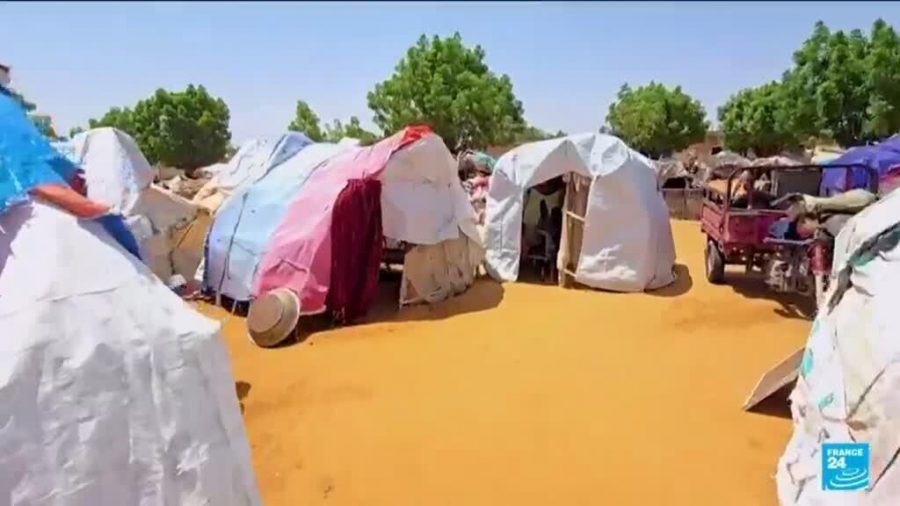
Human Rights Crisis Escalates in Sudan’s Al-Obeid Amid Ongoing Conflict
The humanitarian situation in Sudan’s besieged city of al-Obeid has reached catastrophic levels, as reported by the United Nations human rights chief on Friday. With a backdrop of relentless violence between Sudan’s army and the paramilitary Rapid Support Forces (RSF), the city, which serves as the capital of North Kordofan state, is facing a growing pattern of atrocities that demand urgent global attention.
A War-Torn Landscape
Al-Obeid has become a focal point in a conflict that has raged for more than three years, resulting in widespread devastation and suffering for its residents. The ongoing war has not only driven thousands from their homes but has also severely impacted access to essential services, food, and medical care.
Escalating Violence
The UN human rights chief expressed deep concern over the reports of increasing violence, including targeted attacks on civilians, arbitrary detentions, and the use of sexual violence as a weapon of war. These actions reflect a systematic pattern of human rights violations that are emblematic of the broader conflict engulfing Sudan.
The Humanitarian Toll
The humanitarian crisis in al-Obeid is exacerbated by the region’s isolation and the blockade imposed by the warring factions. The UN estimates that millions of people are in dire need of humanitarian assistance, with many unable to access food, clean water, and healthcare. This situation is further complicated by the displacement of families, many of whom have been forced to flee their homes in search of safety and basic necessities.
Calls for Global Action
In light of the escalating crisis, the UN human rights chief has urged the international community to take immediate action. “The world cannot remain silent while these atrocities unfold before our eyes,” he stated. He called for increased humanitarian access to affected areas, as well as accountability for those responsible for human rights violations.
Local Voices Amidst the Chaos
Local leaders and humanitarian organizations have echoed these calls, emphasizing the need for urgent intervention to prevent further bloodshed and suffering. “We are witnessing a nightmare that is increasingly becoming a reality for the people of al-Obeid,” said a local activist, who highlighted the courage of those working to deliver aid amidst the chaos. “We need the world to see us, to hear our cries for help. Our lives depend on it.”
The Path Forward
As the situation in al-Obeid deteriorates, the international community faces a critical juncture. Diplomatic efforts must be intensified to bring about a ceasefire and to initiate dialogue between the conflicting parties. Additionally, support for humanitarian organizations operating in the region is essential to address the immediate needs of the affected population.
Conclusion
The unfolding human rights catastrophe in al-Obeid is a stark reminder of the urgent need for global action in the face of atrocities. With the potential for further escalation, the time for intervention is now. The world must rally to support the people of Sudan, ensuring that their voices are heard and their rights protected.