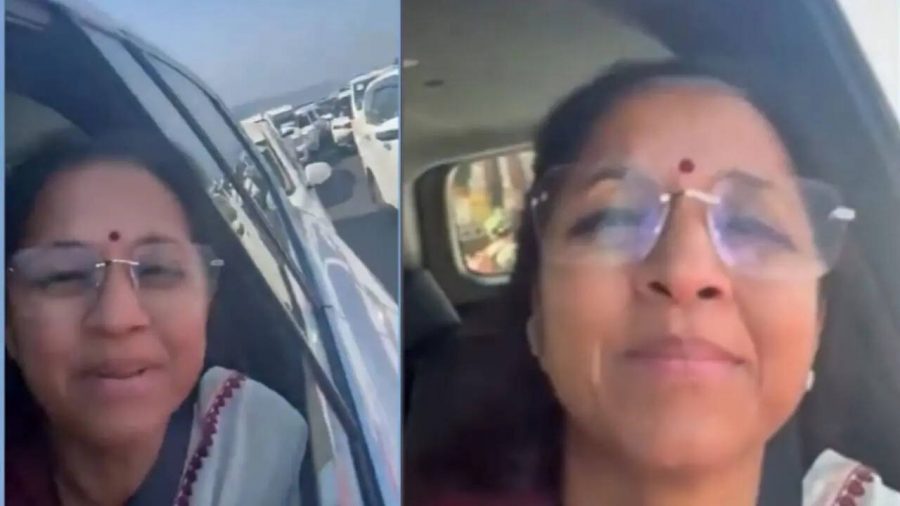
Traffic Chaos Strikes Supriya Sule on Mumbai–Pune Expressway
Nationalist Congress Party (NCP) MP Supriya Sule recently found herself embroiled in a frustrating traffic jam while en route to a Maharashtra Day event in Pune. The traffic congestion not only delayed her journey but also highlighted the ongoing issues faced by commuters on one of the busiest expressways in the country.
The Journey to Pune
As Sule made her way from Mumbai to Pune, she encountered a near two-hour standstill on the Mumbai–Pune Expressway, a route notorious for its high volume of traffic. This incident serves as a stark reminder of the daily struggles faced by countless commuters navigating this essential corridor.
A Day of Delays
The frustration began even before she hit the expressway. Sule experienced a long wait for a cab in Mumbai, where she faced multiple refusals from drivers, a clear indication of the limited availability of rides in the area. After finally securing a taxi, her hopes for a smooth journey were dashed as she became ensnared in the heavy traffic.
Commuter Struggles in Mumbai
The struggles faced by Sule resonate with the experiences of many residents in Mumbai, a city grappling with significant transportation challenges. The daily grind of finding reliable last-mile connectivity is a pressing issue that affects the productivity and well-being of its citizens.
Last-Mile Connectivity Issues
Last-mile connectivity refers to the final leg of a journey, which can often be the most problematic. In Mumbai, the combination of high population density, inadequate public transport options, and traffic congestion exacerbates these challenges. Many commuters are left frustrated, as they find themselves relying on taxis and rideshares, which can be scarce during peak hours.
The Impact on Daily Life
The traffic jam experienced by Sule is not an isolated incident but part of a broader pattern that impacts many individuals in the region. With the city rapidly expanding and the number of vehicles on the road increasing, the strain on existing infrastructure becomes more pronounced.
Calls for Solutions
In light of these experiences, there are growing calls for improved transportation solutions in Mumbai. Urban planners and local authorities are under pressure to address the inadequacies of public transport systems and to consider innovative approaches to enhance connectivity. Possible solutions could include expanding existing public transport options, improving traffic management systems, and promoting the use of non-motorized transport.
Conclusion
As Supriya Sule’s experience illustrates, traffic congestion and last-mile connectivity remain pressing issues in Mumbai and surrounding areas. The need for systematic improvements is critical to ensure that all commuters can traverse the city efficiently and effectively. As the city continues to grow, it is imperative that stakeholders prioritize sustainable transport solutions to alleviate the daily struggles faced by citizens.