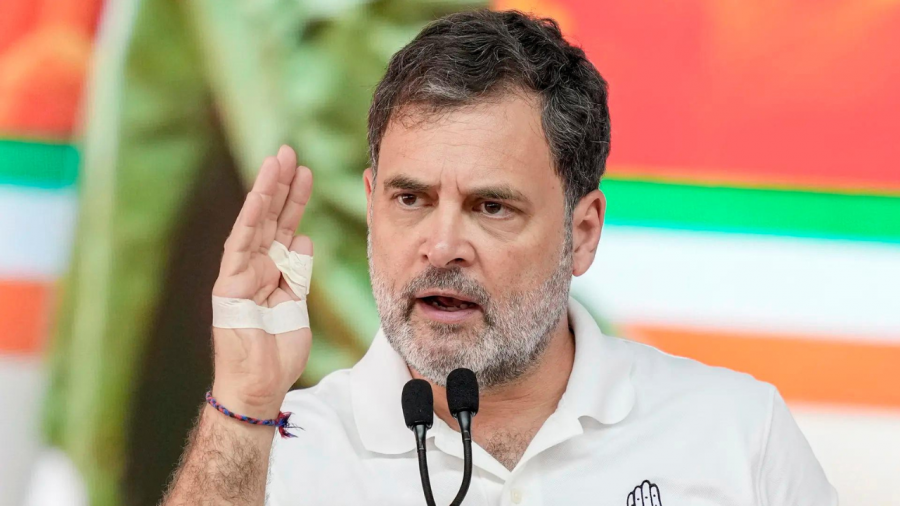
Rahul Gandhi Takes a Stand Against BJP’s Controversial Remarks
In a recent outburst, Congress leader Rahul Gandhi has vehemently criticized the Gujarat BJP chief Jagdish Vishwakarma for his derogatory comments directed at Congress MP Geniben Thakor. This incident has sparked a significant debate about the treatment of women in politics and the ongoing struggle for gender equality in India.
The ‘Pallu’ Controversy Explained
The controversy began when Vishwakarma made an alleged remark about Geniben Thakor’s traditional attire, specifically referencing her ‘pallu’, a part of the saree that covers the shoulder. Such remarks, Gandhi argues, are not merely personal attacks but indicative of a broader anti-woman sentiment embedded within the BJP’s political culture.
Gandhi’s Accusations of Hypocrisy
Rahul Gandhi did not hold back in his condemnation of the BJP, asserting that their supposed commitment to women’s empowerment, showcased through initiatives like ‘Nari Vandana’, is nothing more than a facade. “Their mask has fallen, revealing an anti-woman mindset that is deeply entrenched in their party’s ideology,” he stated, emphasizing the contradiction between the BJP’s rhetoric and their actions.
Women’s Response to Disparagement
Gandhi warned that such insults would not go unchecked, predicting a strong backlash from women across Gujarat and the rest of India. “Women will rise against this kind of disrespect and demand the dignity they deserve,” he asserted. His comments resonate with a growing movement advocating for women’s rights and equality, highlighting the importance of sustaining dialogue around these critical issues.
Political Repercussions
This incident is poised to have significant political implications as it adds fuel to the already heated rivalry between the Congress and the BJP. With elections on the horizon, the treatment of women in politics is likely to become a pivotal issue for voters, especially as more women engage in political discourse and activism.
The Broader Context of Gender Issues in Indian Politics
The remarks made by Vishwakarma and the subsequent backlash illustrate a larger trend of gender-based discrimination within political spheres in India. Women politicians often find themselves the targets of derogatory remarks that undermine their contributions and capabilities. This incident serves as a reminder that the fight for gender equality is far from over, and the political arena is a battleground for such issues.
Conclusion: A Call for Respect and Equality
Rahul Gandhi’s sharp rebuke of the BJP’s comments is not just a defense of Geniben Thakor; it is a clarion call for respect and equality in Indian politics. As the nation approaches a critical juncture in its democratic process, the conversation surrounding the treatment of women must be at the forefront. The time has come for all political parties to reflect on their stance regarding women’s rights and to cultivate a culture of respect, dignity, and equality.