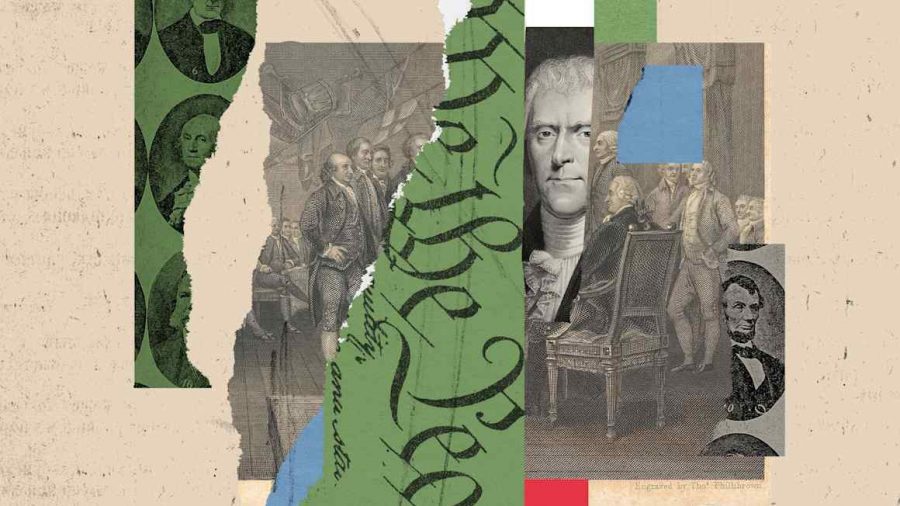
Simon Schama: The Founding Fathers and the Battle for America’s Future
In 1776, the birth of a nation was marked by visions of liberty and justice, yet these ideals were fraught with compromise, conflict, and contradiction. Today, the words of the Founding Fathers continue to resonate, shaping the national identity and influencing contemporary debates about freedom and equality.
The Complex Legacy of the Founding Fathers
The Founding Fathers, a group of revolutionary leaders, crafted a vision for America that was both aspirational and deeply flawed. While they proclaimed the principles of democracy and individual rights, their actions often contradicted these ideals, particularly regarding slavery and the treatment of Native Americans. This paradox remains a critical point of discussion in understanding America’s past and present.
Liberty and Justice: A Double-Edged Sword
Liberty and justice were not simply slogans for the Founding Fathers; they were complex ideals that required negotiation and compromise. For instance, the Constitution was a product of contentious debates that sought to balance the interests of various states and factions. This led to the infamous Three-Fifths Compromise, which counted enslaved individuals as three-fifths of a person for legislative representation. Such compromises highlight the tensions between the ideals of liberty and the realities of power.
Founding Words in Modern Context
Fast forward to the 21st century, and the echoes of the Founding Fathers’ words can still be heard in the halls of Congress and through the streets during protests. Phrases like “all men are created equal” are invoked in discussions about civil rights, immigration, and social justice. However, the interpretations of these words vary significantly, often leading to intense political and social debates.
The Ongoing Battle for America’s Soul
As America grapples with issues such as systemic racism, economic inequality, and political division, the question arises: what does it mean to be true to the vision of the Founding Fathers? Scholars like Simon Schama argue that understanding their complex legacy is crucial for addressing these contemporary challenges. Schama emphasizes that the founding ideals were not static; they were meant to evolve as society progressed.
Revisiting Historical Narratives
To navigate the future, Schama suggests revisiting and reinterpreting historical narratives. This involves recognizing the voices that have been marginalized in the traditional telling of American history. By amplifying diverse perspectives, the nation can foster a more inclusive understanding of its past, ultimately shaping a more just future.
The Path Forward
As America stands at a crossroads, the need for a collective reflection on the founding principles has never been more pressing. Engaging with the contradictions of the past is essential for forging a path that honors the ideals of liberty and justice for all. The Founding Fathers may have laid the groundwork for democracy, but it is up to contemporary society to build upon that foundation, ensuring that it is inclusive, equitable, and reflective of the nation’s diverse population.
- Key Takeaways:
- The Founding Fathers’ vision was marked by contradictions.
- Liberty and justice were often at odds with the realities of their time.
- Modern interpretations of founding ideals continue to spark debate.
- Inclusivity in historical narratives is crucial for understanding America’s future.
In conclusion, the legacy of the Founding Fathers is a tapestry woven with threads of inspiration and conflict. As America continues to navigate its identity, the ideals of liberty and justice must be reexamined and revitalized to reflect the diverse fabric of its society.